Lions
of the Serengeti
lions, light, and
photographing majesty
Nothing stirs the imagination of wild Africa quite like a lion. There is an authority in the way they carry themselves that no other predator on these plains quite manages. An unhurried certainty in every footfall, power held rather than announced, and a fluid, deliberate grace that seems entirely unbothered by the fact that it is being watched. This is the article partners the Apex: Wild Legends series, and it begins where so much of my own fascination with lions began: the eastern plains of the Serengeti, and the granite kopjes.
For half the year it is a scorched plain. Then the rains arrive, and within weeks it becomes one of the richest grazing grounds in East Africa, drawing the migration's herds directly across lion territory on their way south. That seasonal abundance is precisely why this stretch of the Serengeti holds some of the highest lion densities anywhere on the continent, and why it has been the subject of one of the longest continuous predator studies in the world. Prides here are named, tracked, occasionally lost to rival coalitions and remembered afterward — Vumbi, Barafu, the Gol Kopjes pride, dynasties rising and falling in full view of anyone patient enough to keep returning.
The Eastern Corridor
Kopjes , some of them older than the plains around them by hundreds of millions of years, rise abruptly out of ground so flat and featureless that a boulder the height of a house reads, from a distance, like punctuation on an otherwise empty page.
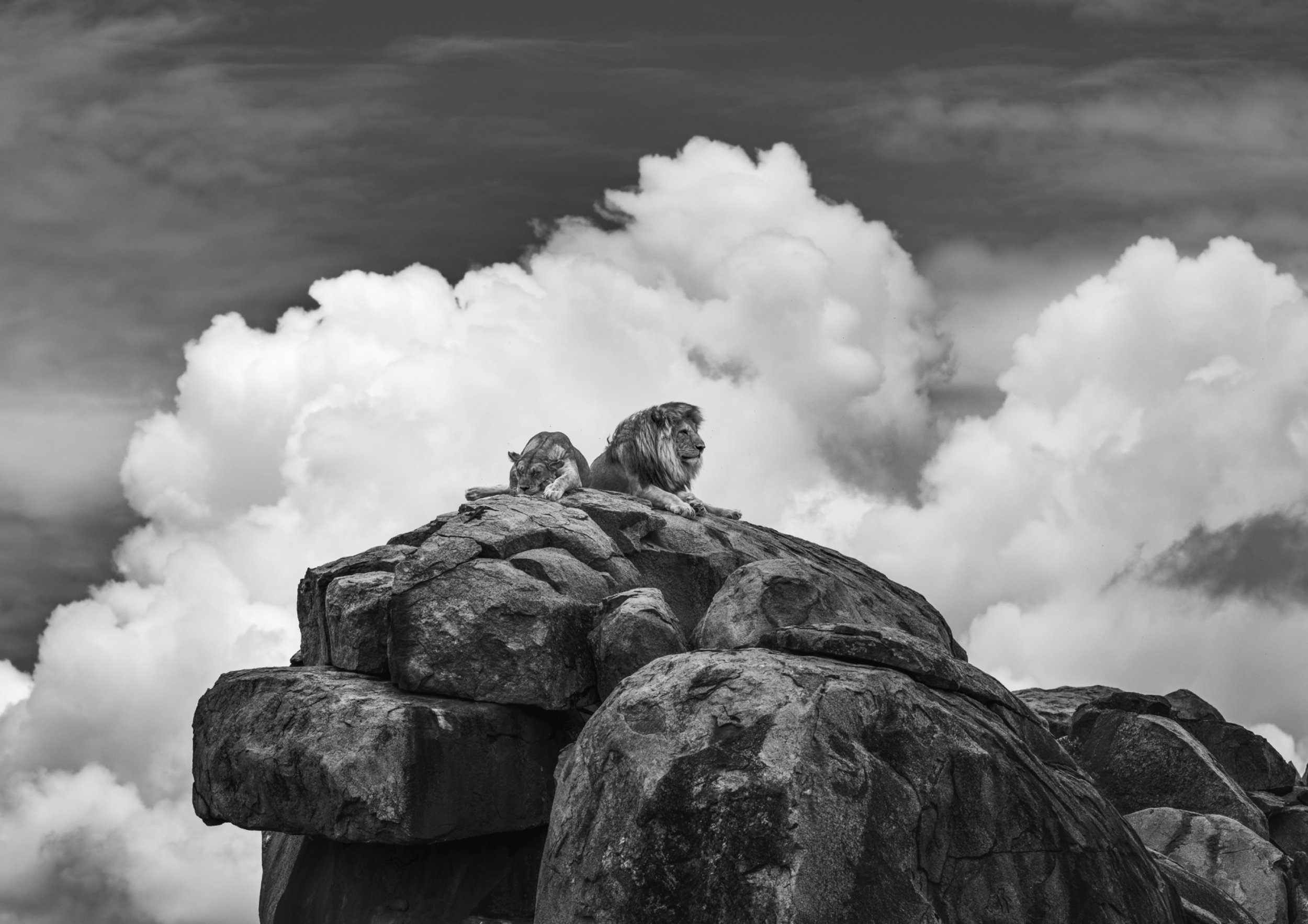
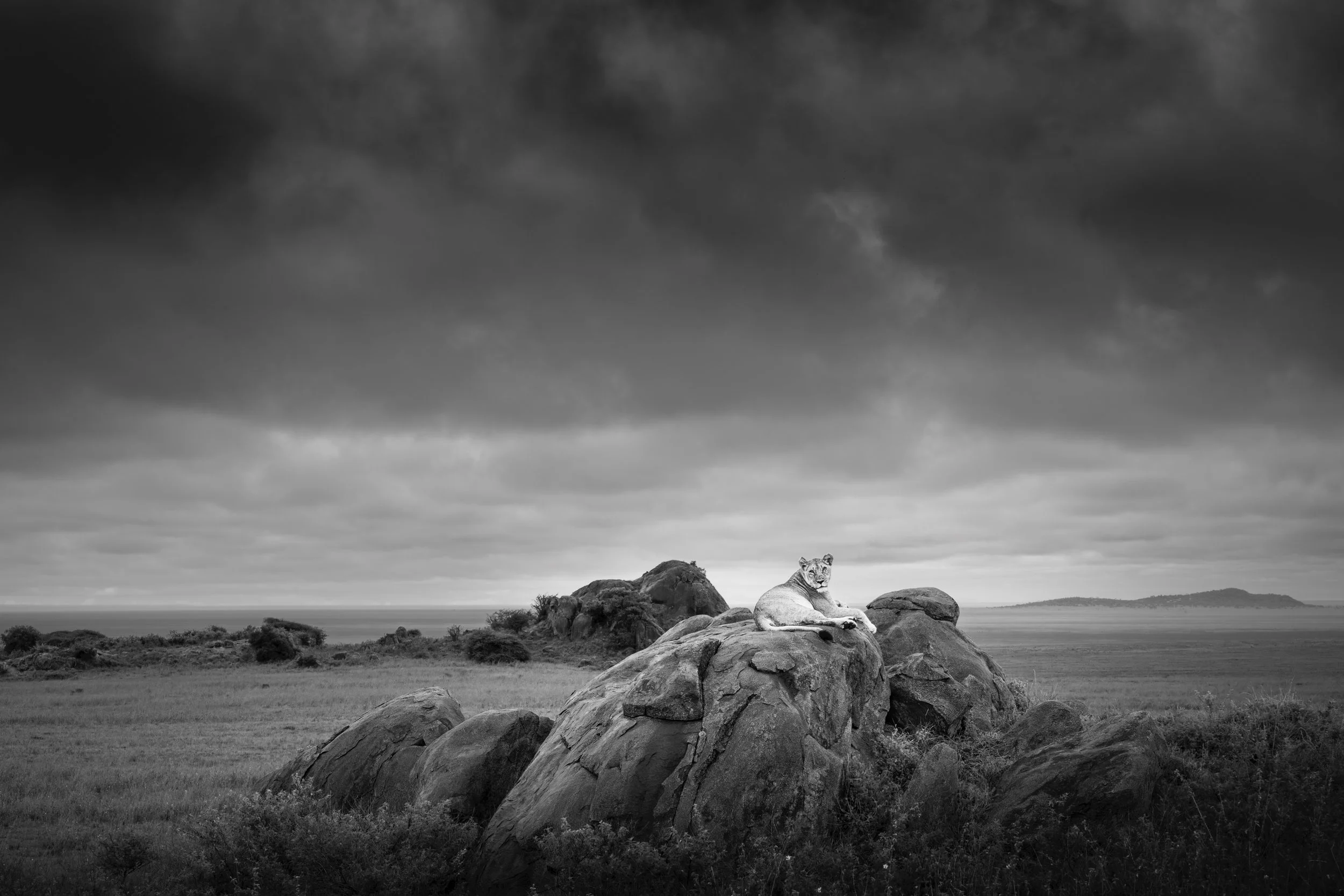
For the lions, the kopjes are practical before they are beautiful — shade in the heat of the day, elevation to watch herds crossing the plains below, denning sites safe from the attention of hyena clans. For a photographer, that practicality becomes composition. A pride draped across sun-warmed granite, the plains falling away behind them to a horizon with nothing to interrupt it, gives you what open savannah rarely does on its own: genuine negative space, and a vantage point elevated enough to put a lion's gaze level or above your own rather than beneath it.
“The technical work gets you a sharp lion. Everything after that is deciding what the print is actually about.”
— Alex Wood
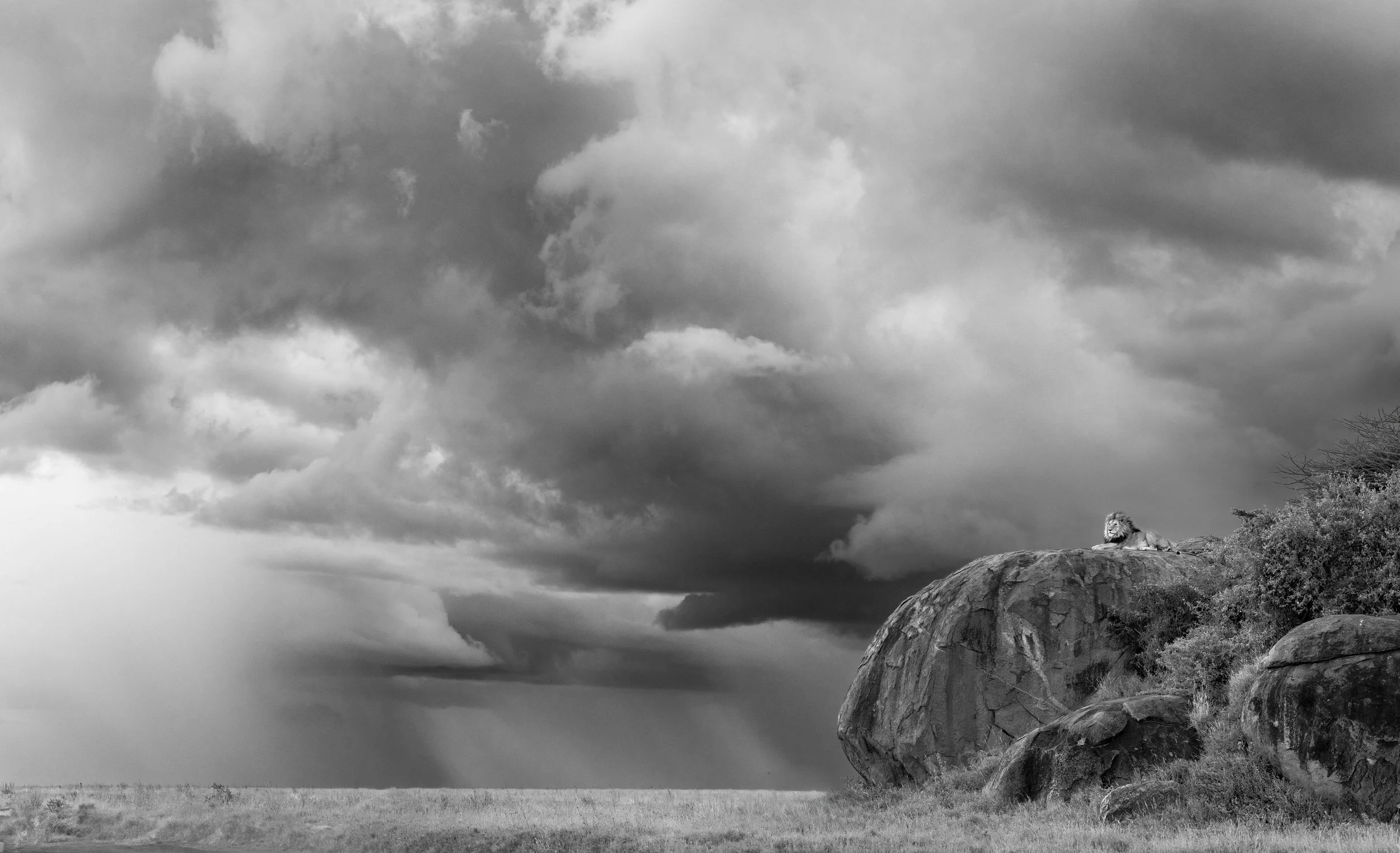
I work almost exclusively in monochrome, and lions are, if anything, the subject that makes the hardest case for that decision. The technical challenge is a matter of finding contrast honestly rather than manufacturing it after the fact. A moody sky, cloud building ahead of a storm, hard directional light early or late in the day — these are the conditions worth waiting for, because they give the tonal range a black and white print depends on before a single edit is made. What I'm actually chasing in post-processing is restraint: lifting the tones already present in the animal rather than inventing new ones, letting the print stay honest to what the light actually did that morning. The goal isn't a moody filter over a colour photograph. It's an image that could plausibly have been made fifty years ago, or fifty years from now — timelessness as a deliberate artistic choice, not a stylistic default.
Making the Image your Own
Anyone who has spent real time photographing lions eventually runs into the same problem: the image already exists. A lion on a kopje at golden hour has been photographed, extremely well, more times than any single photographer could hope to improve on through subject alone. The question that actually matters, and the one I think about more than any technical setting, is what a print can hold that a thousand similar images don't.
Perspective
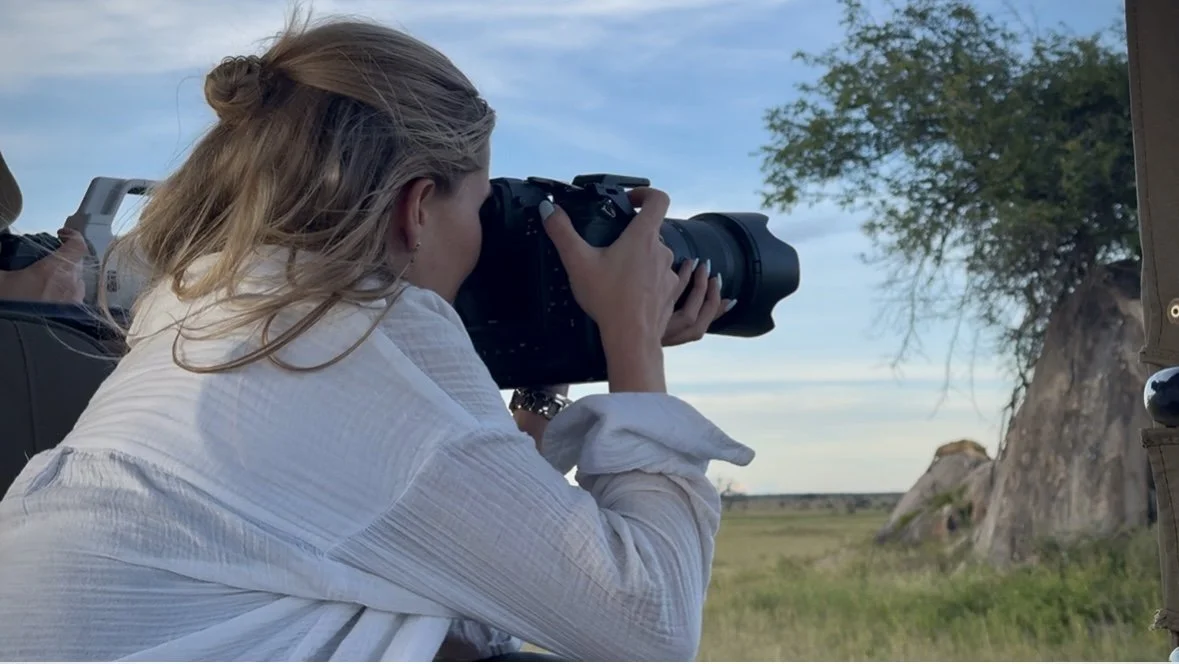
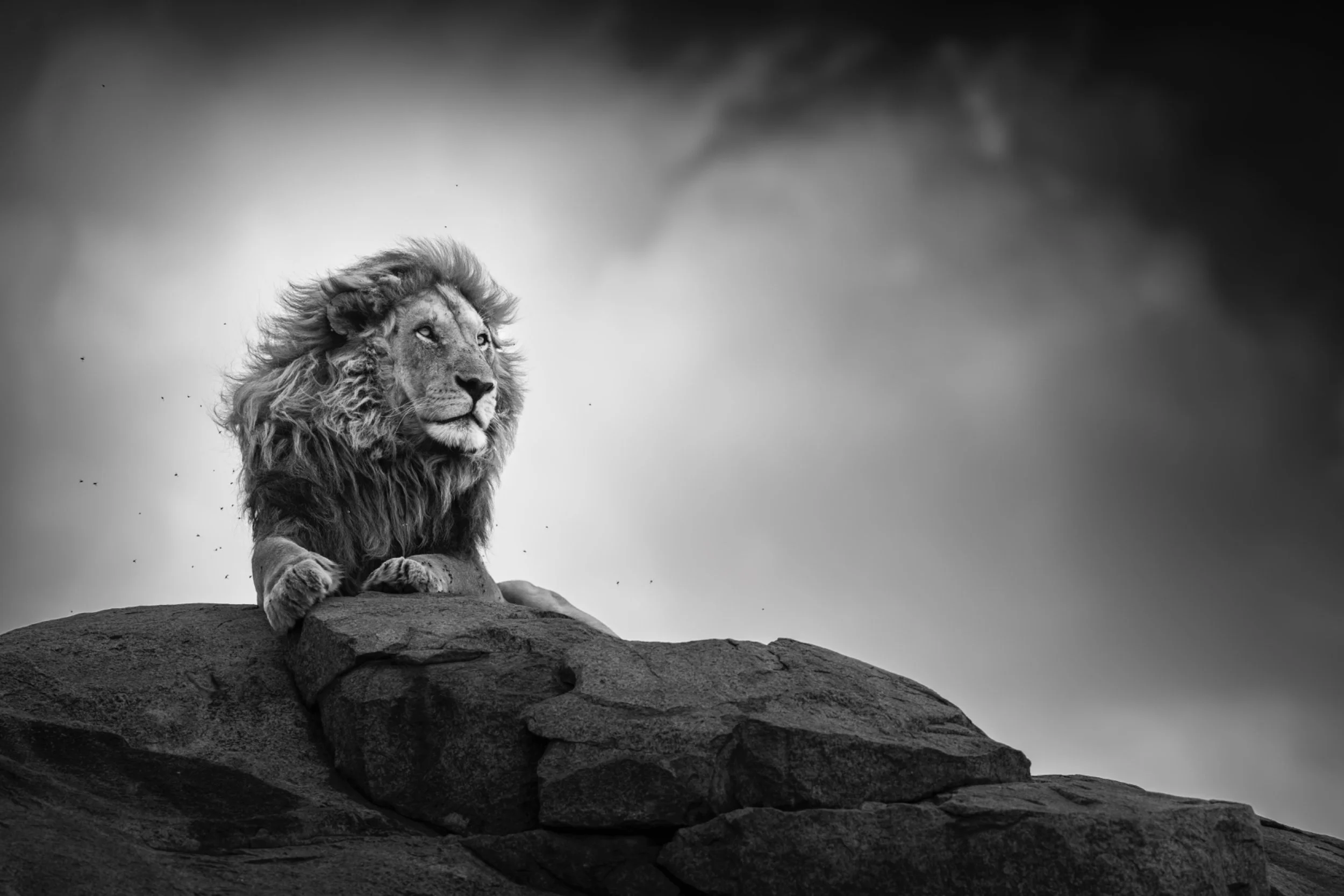
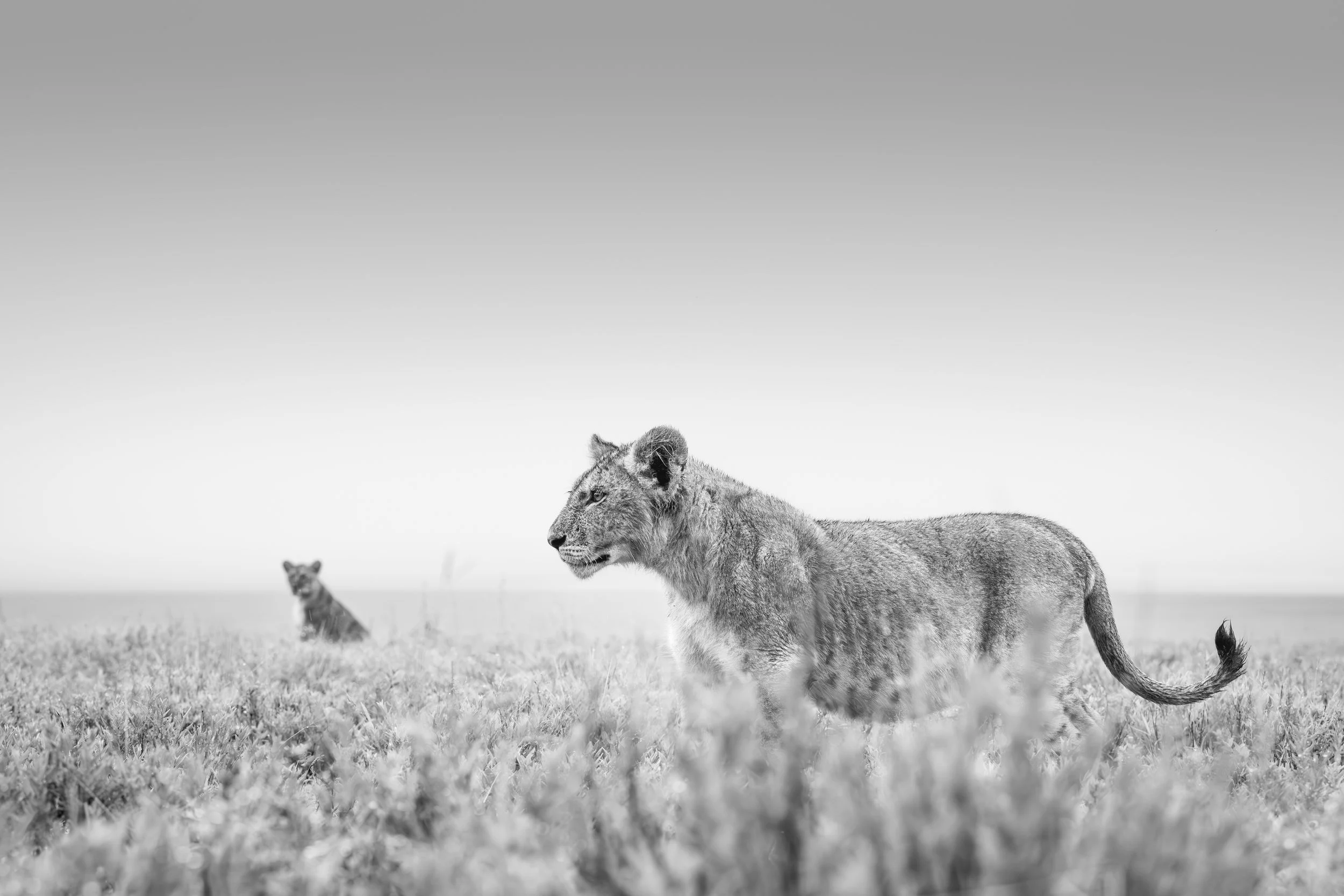
Part of the answer is perspective, quite literally. Vehicles rarely allow the low, ground-level vantage that gives a lion its true scale, so I've come to rely on a monopod and a mirrorless body to get the lens close to ground level without compromising safety — shooting wide open, background thrown entirely out of focus, so there is only ever one thing in the frame worth looking at. At that angle, with the right glass, the plains and the lion can be anchored together in a single composition rather than competing for attention, and the animal gains a stature that a standard eye-level frame never quite manages. None of it works without patience for the details that make or break the shot regardless of angle — a lion's eyes are shut as often as they're open, and getting a clean line on all four paws in the same frame as genuine eye contact is closer to luck engineered through volume than to any single skill. I shoot at the highest frame rate my camera allows for exactly this reason: not because more frames guarantee a better one, but because they multiply the odds that the moment I actually wanted was captured rather than missed by a fraction of a second.
Atmosphere
The second discipline is atmosphere, and it has less to do with the lion than with everything around it. A kopje in flat midday light is a rock with a lion on it. The same kopje under a gathering storm, or in the last low light before dusk, becomes a stage — and the lion becomes something closer to a figure carved into it. I've learned to treat weather less as an obstacle to work around than as a collaborator worth waiting for, because the atmosphere in a frame is frequently doing more emotional work than the animal itself.
Subject Separation
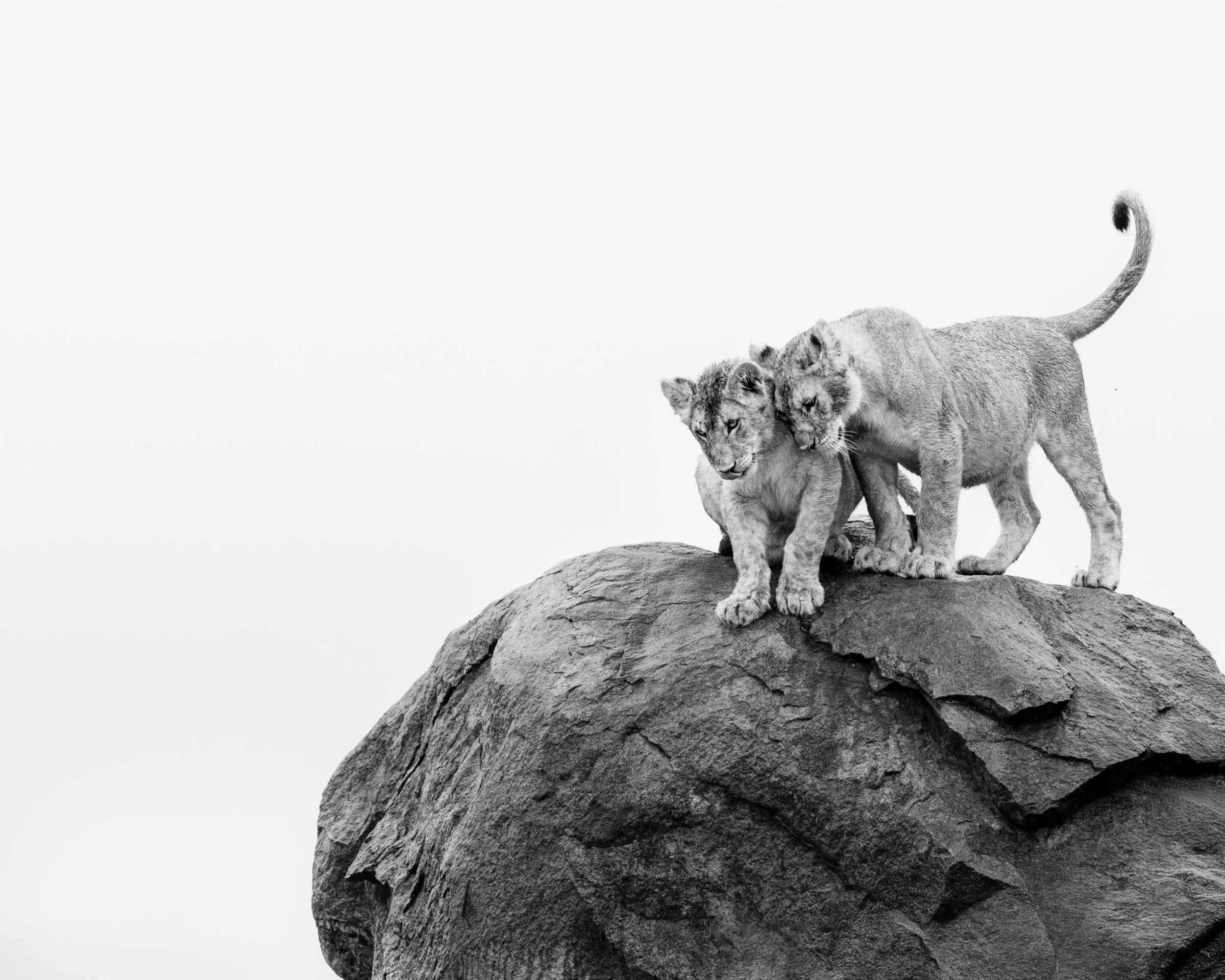
The third, and the one I find hardest to plan for, is the space between individual lions rather than any single one alone. Prides spend the overwhelming majority of a day asleep, which makes the brief windows around dawn and dusk — when cubs start testing their limits against patient adults, when a coalition of brothers greets each other after time apart — disproportionately valuable. A head bump between two males, a mother tolerating a cub's badly timed attempt at play: these moments say something about lions that a solitary portrait, however striking, cannot.
“With lions, the eyes do almost everything. Light them from the right angle, let the animal sit silhouetted against the plain, and what remains isn't drama — its presence. A gaze holding centuries of the same ground.”
— Alex Wood
What I want someone to feel standing in front of one of these prints isn't simply that a lion is magnificent — that much is self-evident, and doesn't need a photograph to prove it. I want the print to hold the actual conditions of the encounter: the particular light that morning, the wait that preceded it, the decision to isolate this animal against this sky rather than any other.