Equus
Exploring Iceland
horses, myth, and a landscape of fire and ice
Iceland does not keep a season for long. It is entirely possible to stand in sun, sleet, fog, and still air within the same afternoon, the light changing its mind three or four times before lunch. It is a place that makes you feel appropriately small — and everything that makes it difficult to work in is also, without contradiction, the reason it is unlike anywhere else on earth. Waterfalls that seem lit from within due to the colour of the water and spray. Black sand meeting water the colour of nothing else I've photographed. Glacial blue so saturated it looks corrected until you've seen it yourself.
The Icelandic Horse
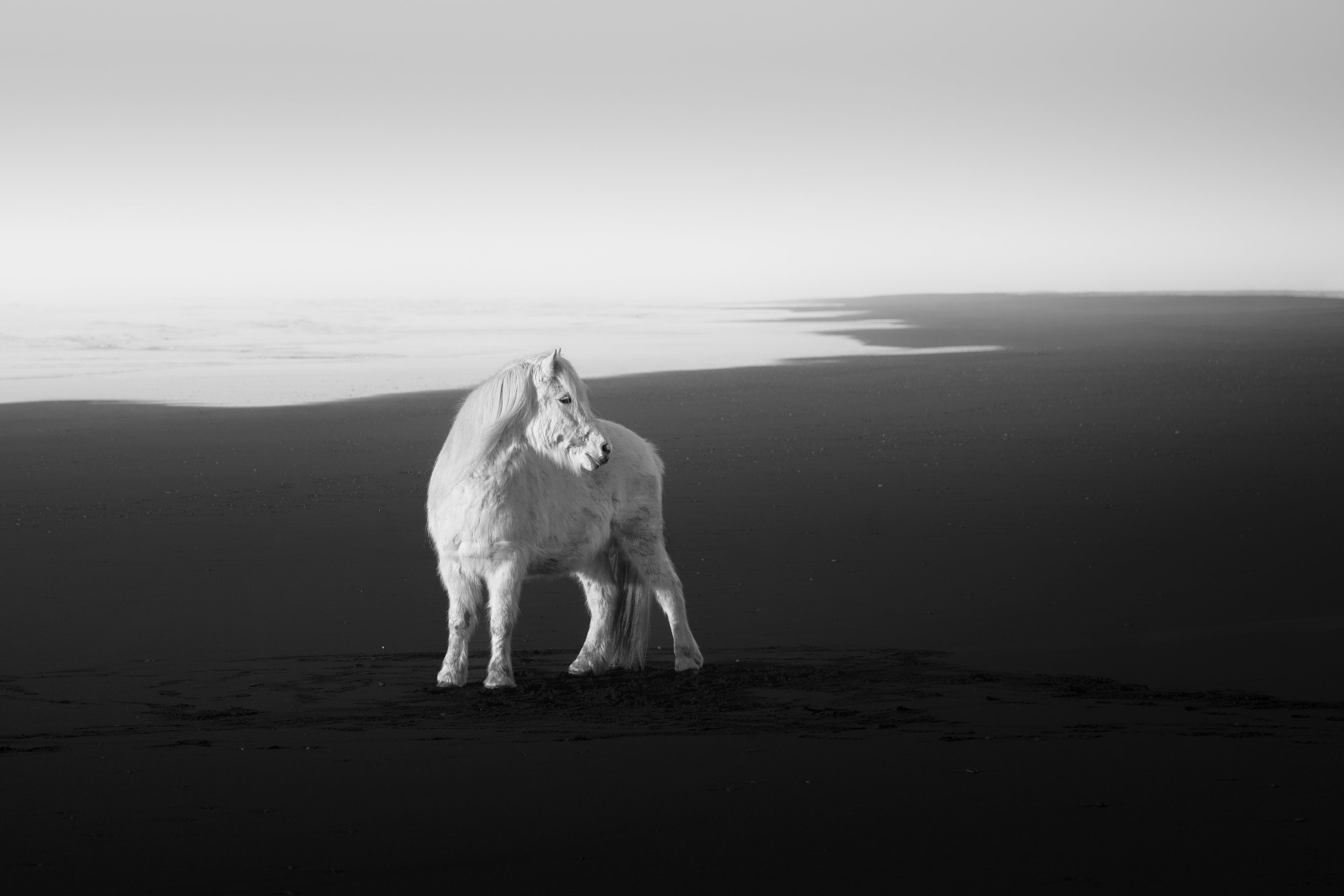
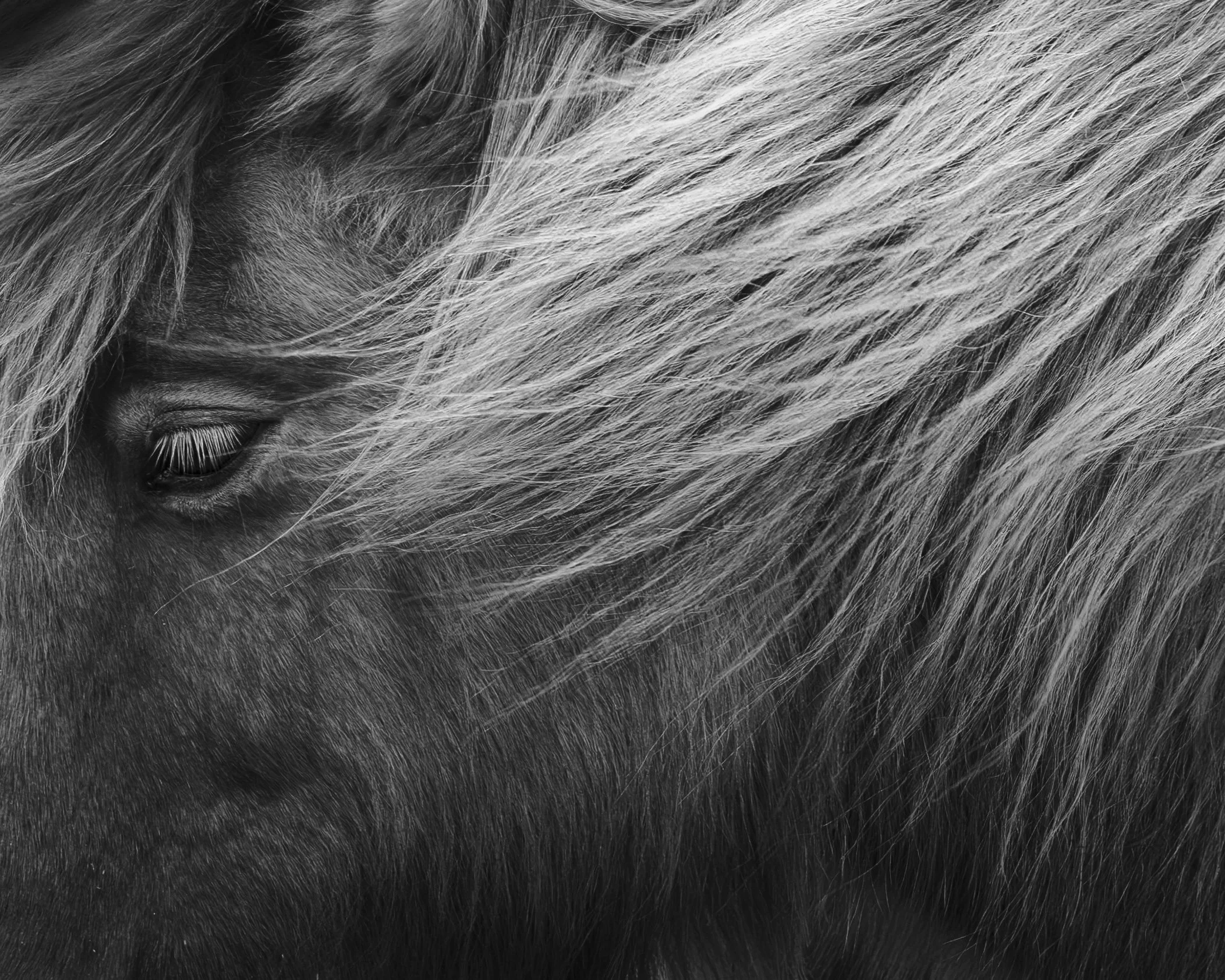
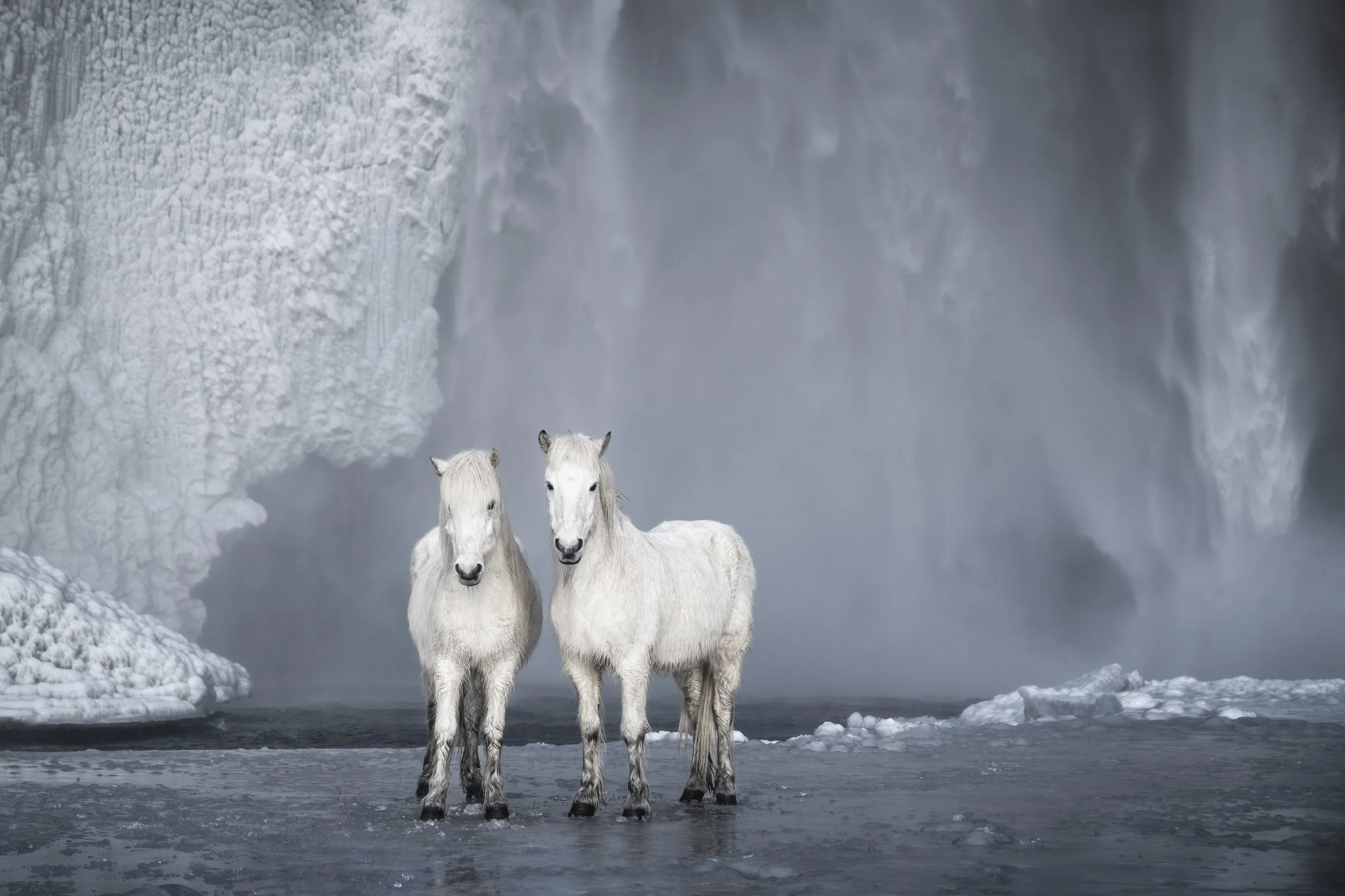
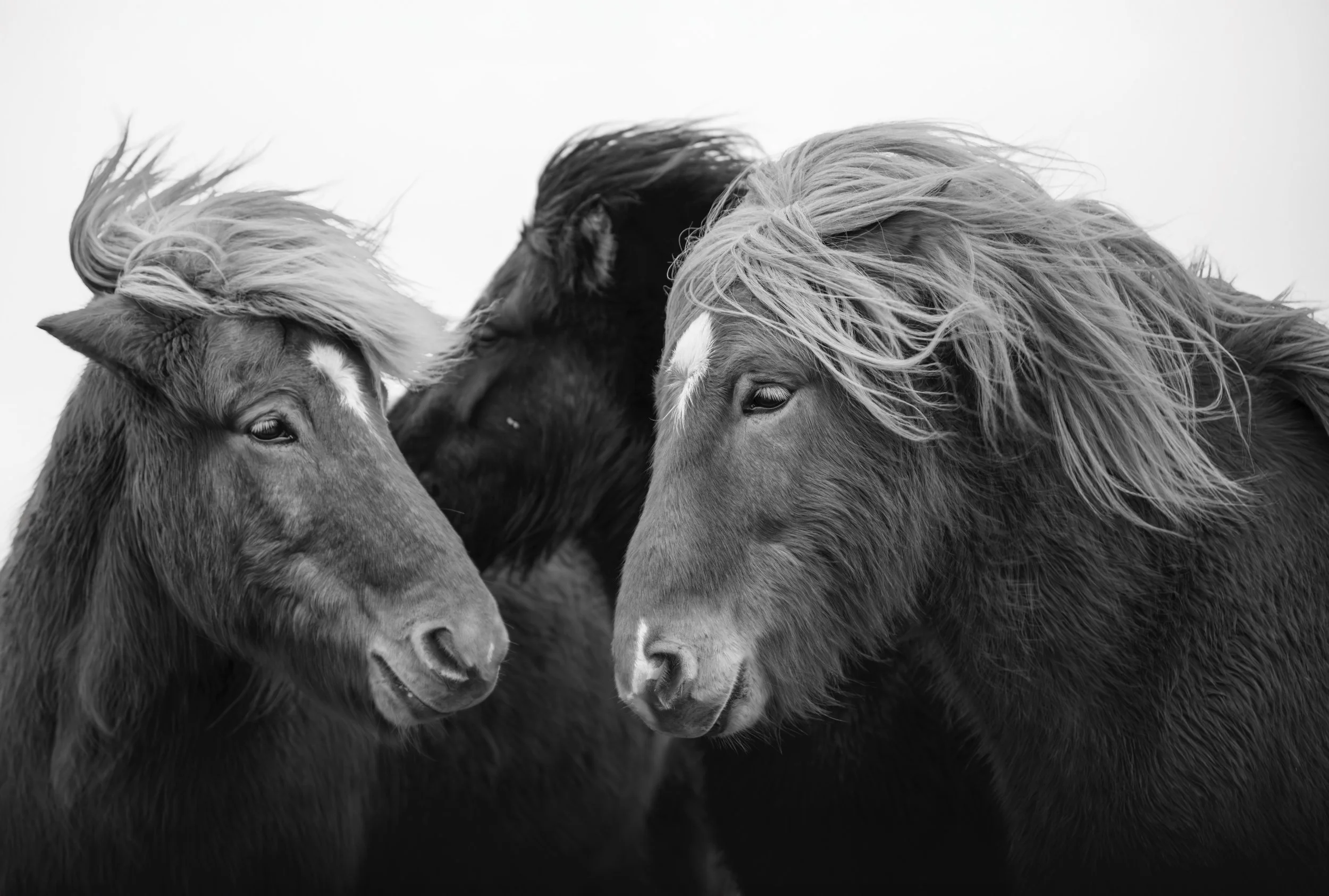
The Icelandic horse is small and entirely unbothered by that fact, just at home in its natural surroundings. What it lacks in stature it makes up for in a thick winter coat, a temperament shaped by a thousand years without a single natural predator, and a gait found in almost no other breed on earth. None of that alone would make for a compelling subject. What does is the pairing: an animal this calm, this settled in itself, set against a landscape that changes mood by the hour. The horse becomes a kind of constant.
There is also, simply, nowhere else to make this particular photograph. Take the same horse to a paddock in the UK and you have a fine portrait of a horse. Put it against a black sand beach with a glacier calving somewhere behind the frame, or ankle-deep in snow with steam rising off its back into freezing air, and the photograph becomes about something larger than the animal — the specific, improbable fact of this creature choosing to endure, and thrive, here.
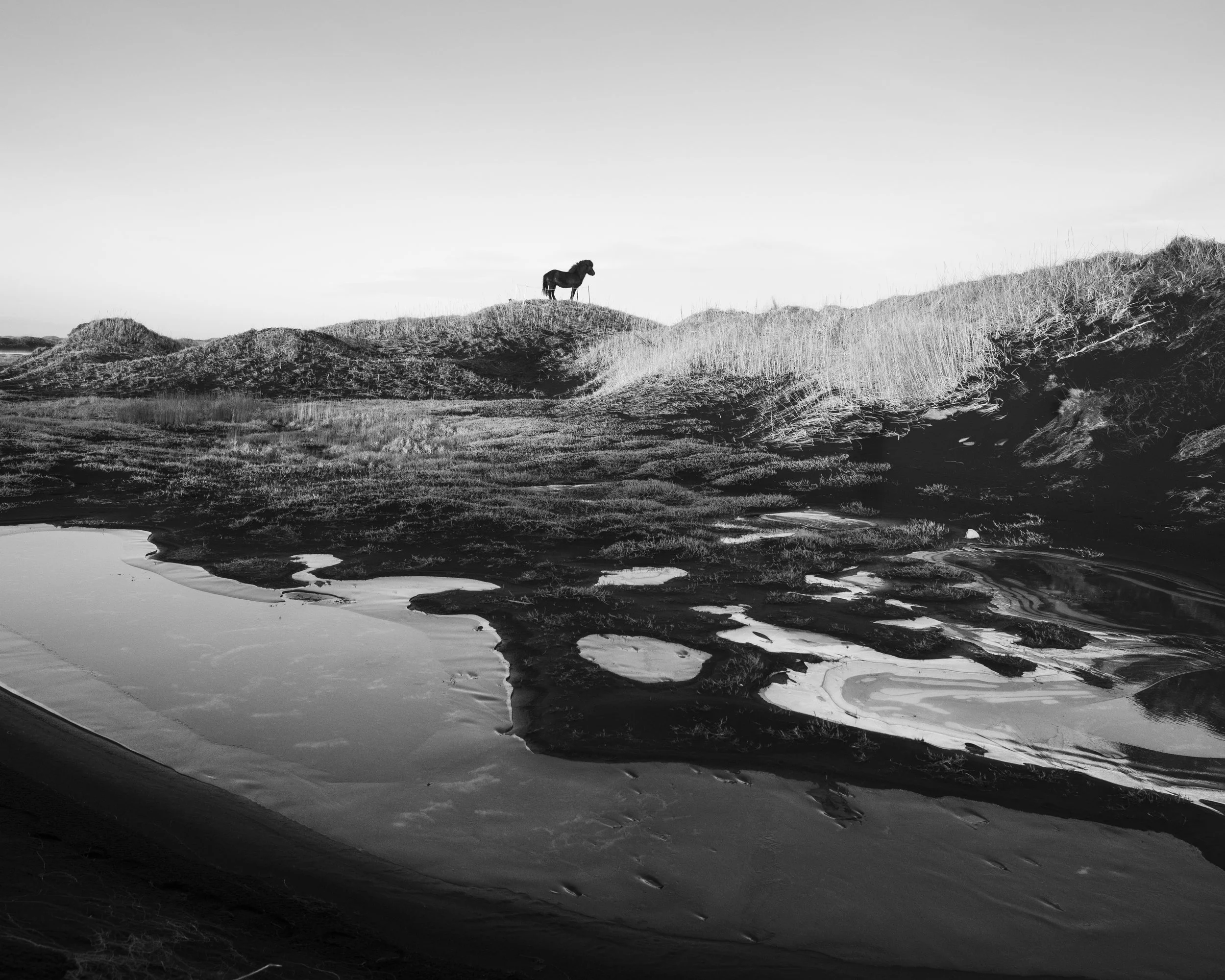
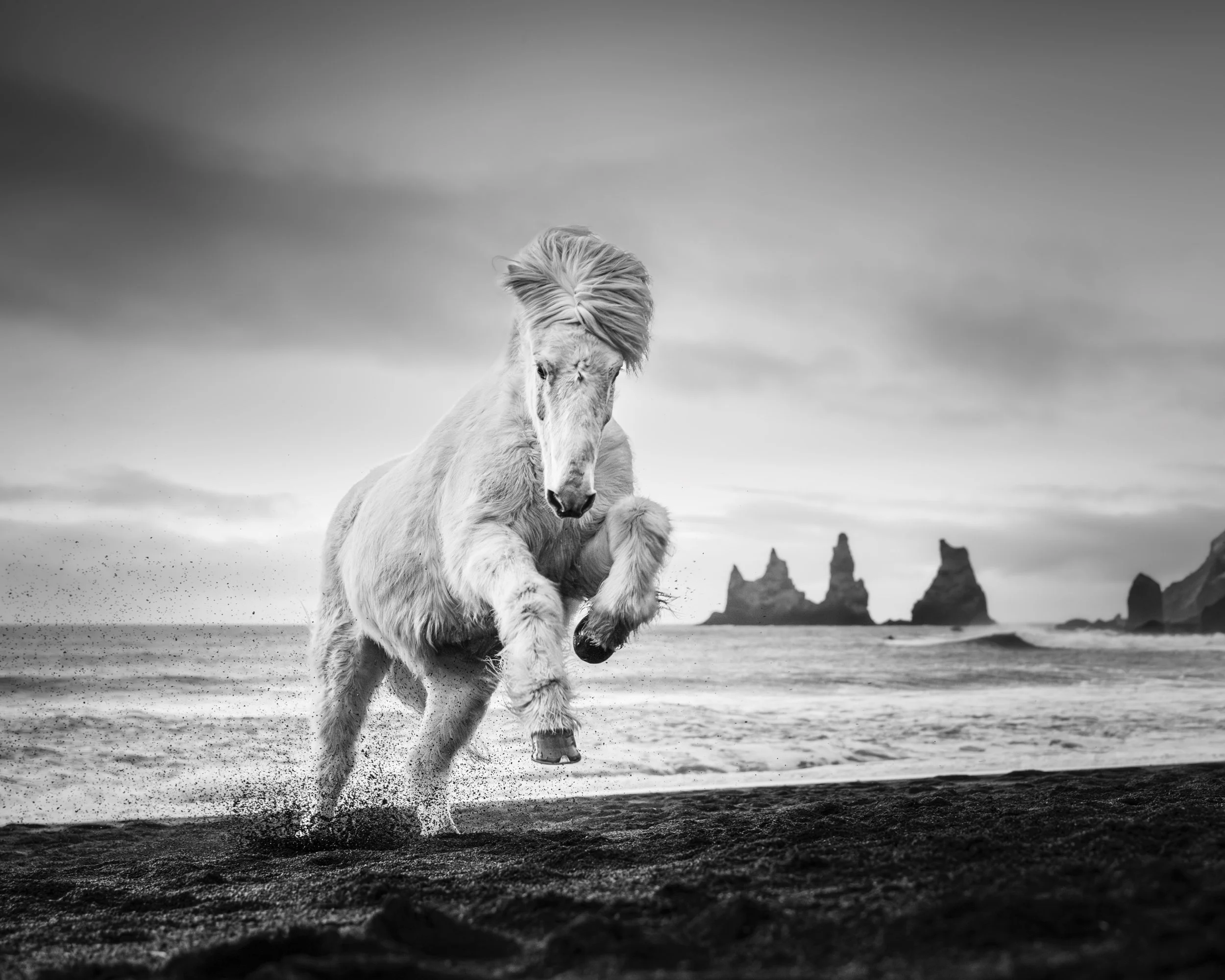
This particular trip stayed close to the south coast — the black sand stretches near Vík, and the waterfalls that fall in sheets rather than threads. Unusually, I didn’t have any snow whilst there. Whilst initially disappointing, it wasn't a loss so much as a different assignment: basalt and grey water instead of white ground, a starker, more graphic palette than snow would have given me.
The Living Myth
Every Icelandic horse alive today descends from stock brought over by Norse settlers more than a thousand years ago, and from the year 982 onward, Iceland's parliament made it law that no horse could ever be imported again. The result is one of the purest, most genetically isolated breeds on the planet — a bloodline unbroken since the Viking age, carrying gaits, including the singular four-beat tölt, that have all but vanished from horses anywhere else in the world.
“A thousand years of isolation produced an animal that looks like something born of the land itself.”
— Alex Wood
982 the year Iceland's parliament banned all horse import
1000+ years of unbroken, isolated bloodline
40 recognised colour and marking variations within the breed
The old sagas didn't treat that lineage as incidental. Horses appear throughout Norse mythology as something closer to intermediaries than animals — capable, in belief if not in fact, of carrying the dead onward, of delivering messages between the human world and whatever lay beyond it. Odin's own horse, Sleipnir, could famously cross between worlds entirely. It is not difficult to understand why, watching an Icelandic horse hold its ground calmly in weather that would send most animals running for cover, earlier generations decided this was not an ordinary creature they were looking at.
The reverence wasn't only spiritual. These were the animals that carried the Vikings across ground no wheel could manage — long distances, hard labour, terrain that would have stopped almost anything else outright. That practical debt seems to have never quite left the Icelandic relationship with its horses. Even now, they're spoken about less like livestock and more like family — named individually, remembered across generations, worked into a household's identity rather than kept at a working distance from it.
Blending Character with Landscape
The aim was to create a visual equilibrium: enough environment that the location is unmistakable, but composed tightly enough around the animal that its individual character — the tilt of an ear, the set of a stance against wind, the specific texture of a coat built for exactly this cold — never gets lost in the scenery around it.
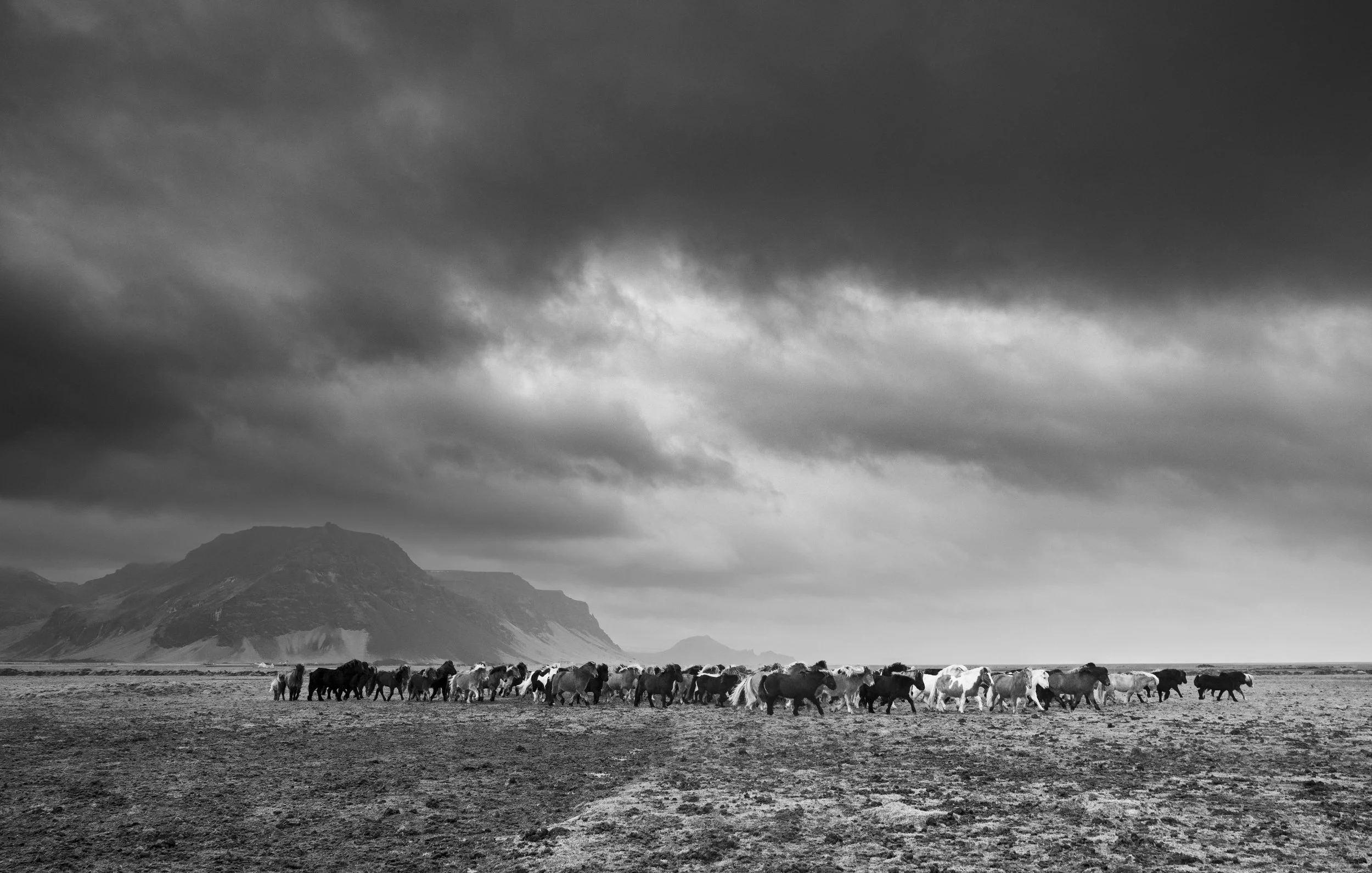
A horse that reads as monumental against a clear glacier face becomes something quieter and more intimate the moment fog rolls in and the background disappears into grey. I've come to think of the conditions less as an obstacle to plan around and more as a co-author — the land deciding, hour to hour, what kind of portrait is actually available that day.
Winter light in Iceland doesn't arrive until well past nine. That compresses a working day into two real windows — a stretch through the late morning, a second in the few hours before dusk — and each one was spent somewhere different: a single horse against the beach one session, a small group framed by a waterfall the next, the scale of the subject changing along with the light. There's very little room in that schedule for a wasted hour, which oddly makes the whole process more disciplined than a longer, gentler day would have allowed.
What I hadn't expected was how little distance the horses themselves wanted to keep. Settle into a field and wait, and before long they close the gap on their own terms — an inquisitive nose at a camera bag, a tug at a sleeve, the odd deliberate wander directly into a frame mid-exposure. It is, in its way, the opposite problem to the one I'd spent years solving with lions and rhino: not how to get close enough, but how to keep enough distance to still call it a portrait.
Equine Photography and Minimalism
“Wait for the horse to find its own negative space against the sky or the sand, resist the urge to fill the frame with more than the moment needs, and you end up with am image that blends dream with reality.”
— Alex Wood
I didn't arrive at this landscape with no map at all. Jonathan Chritchley has been photographing horses along coastlines for the better part of three decades, working almost exclusively in black and white, and it was partly his early images of wild horses that first put this idea in my head. What I've taken from his approach isn't a technique so much as a discipline: strip a scene down to its simplest possible elements, and treat poor light not as a problem to fix but as an opportunity for something closer to impressionism — slower shutter speeds, softer edges, a horse rendered as much by motion as by outline.
Minimalism, in this landscape, isn't really a stylistic preference. It's closer to an honest response to what's actually in front of you. Iceland rarely gives you clutter to remove — the horizon is often a single clean line, the palette naturally reduced to two or three tones before any processing begins.