Below the Surface
First descent into the underwater world
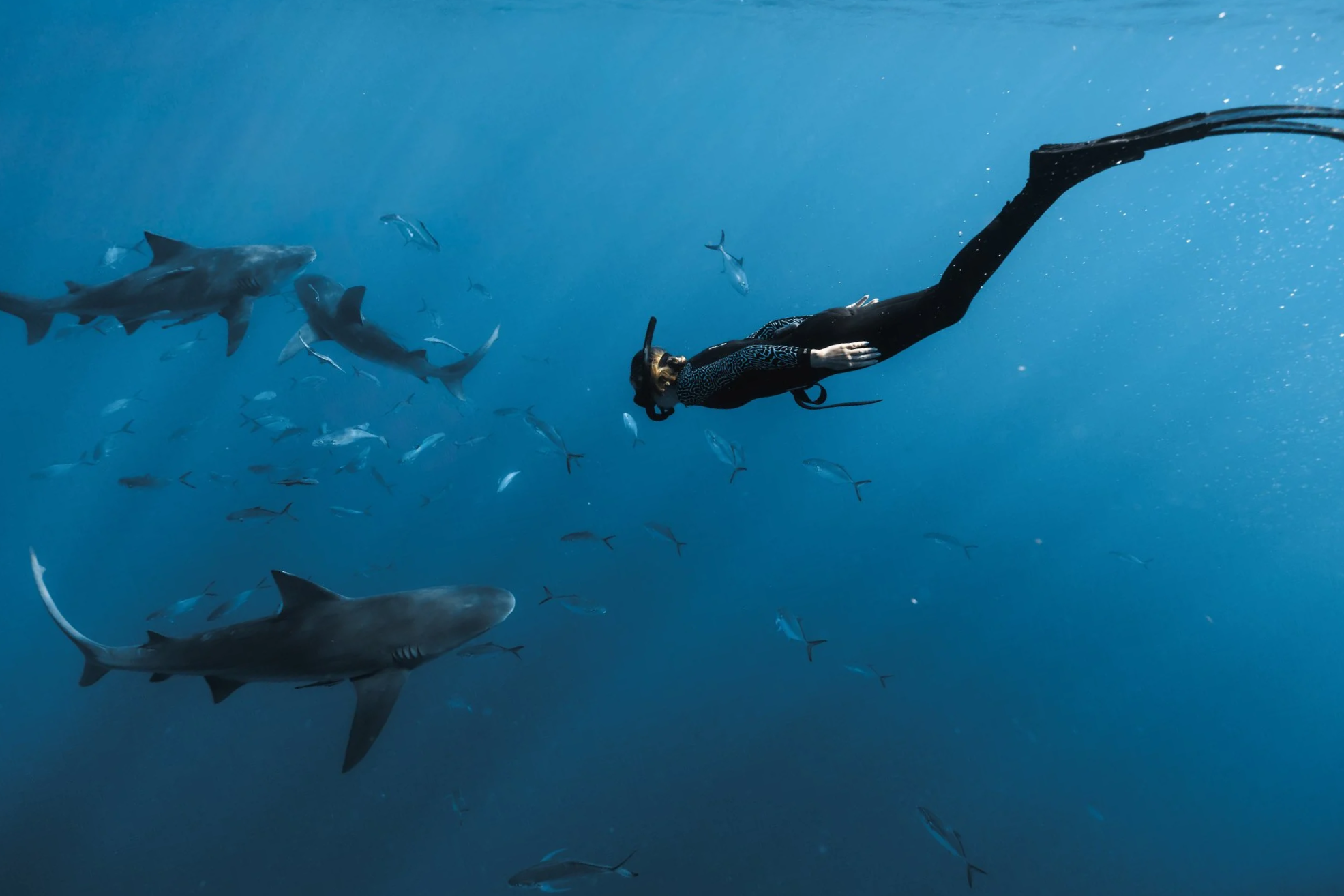
What Lies Beneath is the first entry in an ongoing underwater series — beginning with bull sharks off Jupiter, Florida, and building, dive by dive, toward tiger sharks.
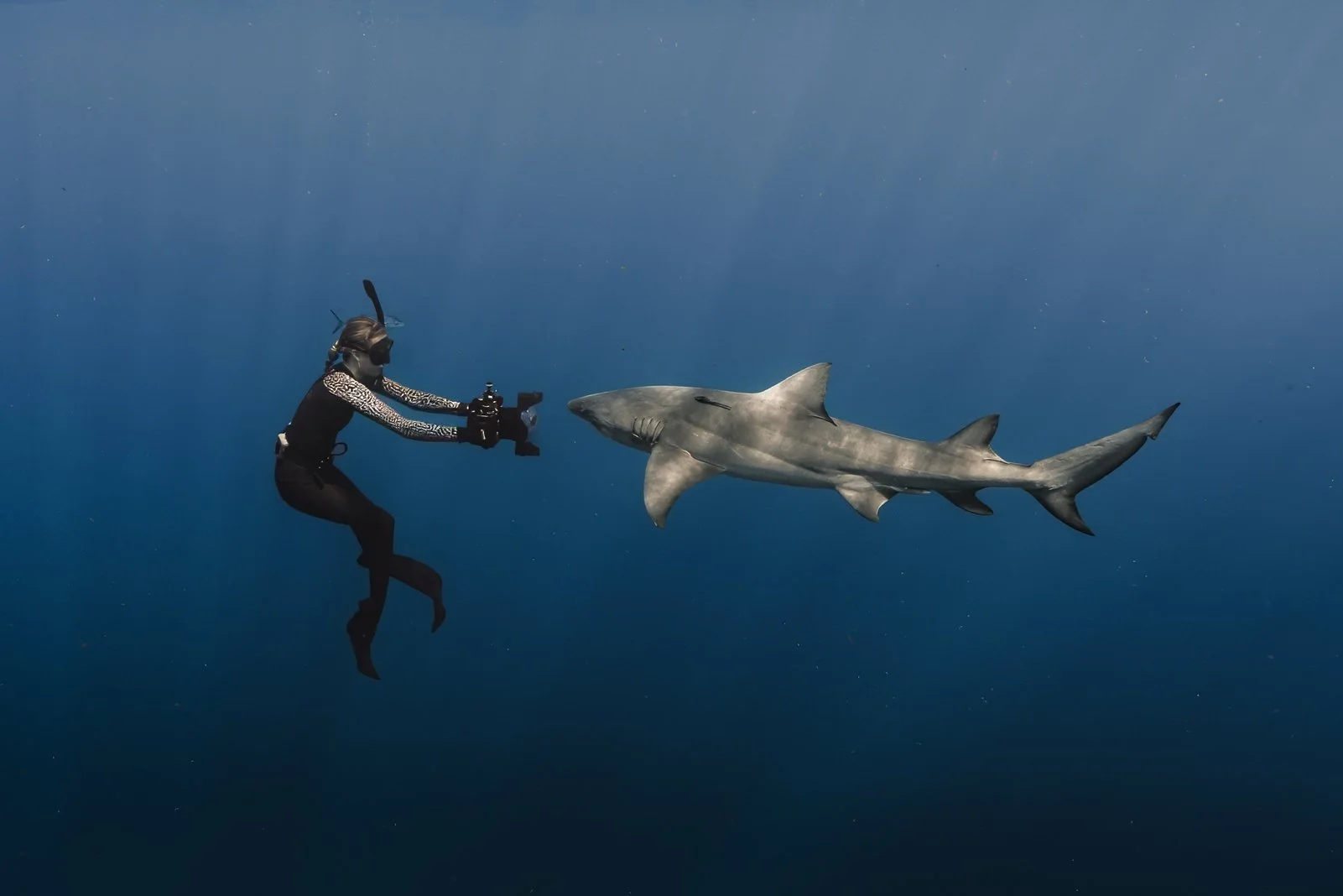
It begins with three firsts at once: I had never swam with sharks, never free dived, and never shot underwater at all. Somewhere off Jupiter, in open water, I would be learning all three.
Bull sharks were the reason for the trip. Thick-bodied, unhurried, built for murkier water than the clear reef shallows most people picture — though I had no personal frame of reference for any of it. I had never so much as pointed a camera at a shark before this. Free diving was new. The housing, the light underwater, the whole grammar of shooting without solid ground beneath me — all of it was new, all at once.
The eventual aim is tiger sharks. Larger, less predictable, considerably less forgiving of a photographer who hasn't yet learned to read a shark's intentions from posture alone. Starting there, with no underwater experience of any kind behind me, would have been a risk. Not only would I have been literally out of my depth, I likely wouldn’t have felt comfortable experimenting with different types of shot. So I began smaller, with the aim of learning more about shark behaviour.
The Deep Blue, Jupiter Beach
Jupiter offered a particular kind of experience — deep, uncluttered blue, the kind that lets a subject stand almost entirely alone in the frame. As someone who works mostly in monochrome, that mattered more than any single species on the dive list. A minimalist frame needs empty space to mean something, and this water gave me space in a way I suspected reef shallows never quite could.
It also offered range. Reef, sandbar, bull, lemon, occasionally hammerhead, and — with enough patience — the chance of something larger passing through. Four days felt like enough time to sit with that variety rather than chase it, which was the point. A good photograph has always depended on understanding the subject before asking anything of it, so the plan, going in, was to watch first and shoot second.
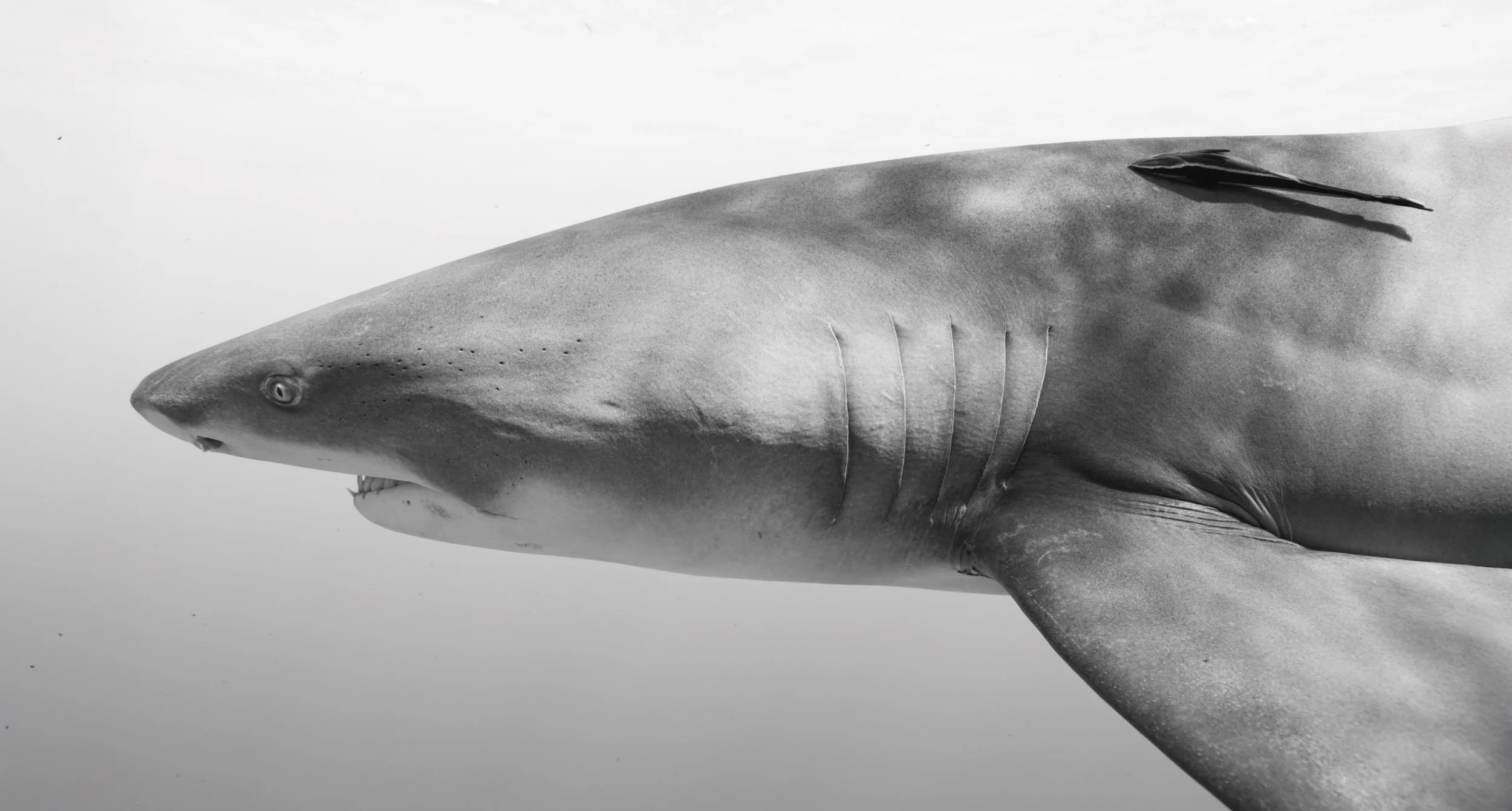
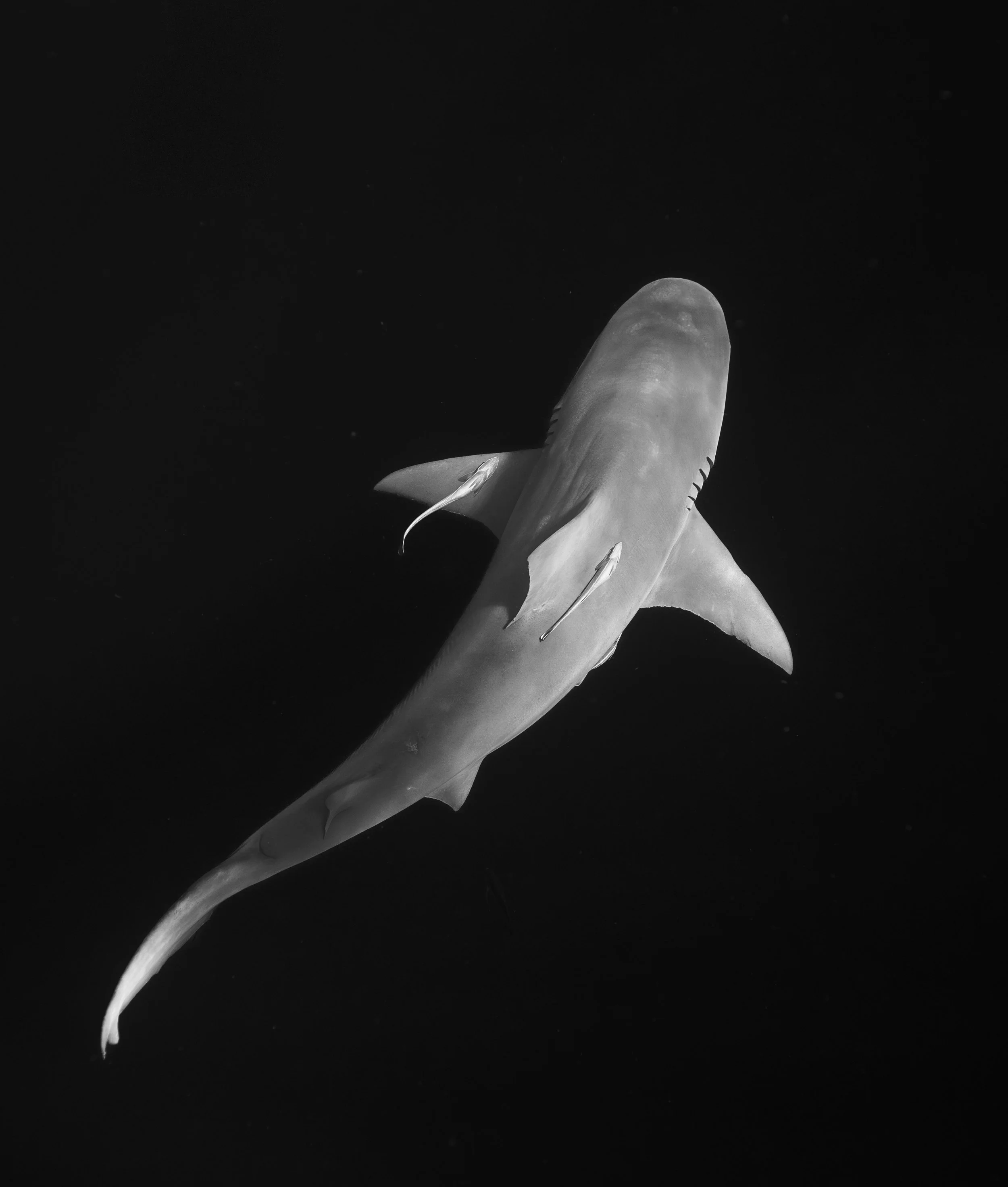
“Watch long enough and the water seems to slow around them. You stop tracking a shark and start following a rhythm.”
— Alex Wood
The Plan
On paper, four days had a clean structure to them — a slow build from learning the ropes to technical experimentation to depth, each day laying the groundwork for the next.
Day 1 - Immersion and behaviour
First dive of the trip — no agenda beyond getting comfortable in open water with sharks circling.
Day 2 - Underwater Photography Techniques
Learning the housing properly, dialling in a custom white balance, adjusting to shifting light and particulates in the water with no strobes to fall back on.
Day 3/4 - Focus on Lining up the Shots
Deeper free dives, a wider range of species, and — with the groundwork laid — the shots I'd actually come for.
The ocean, in the end, set its own schedule. Conditions across the first three days made diving impossible, and the careful build I had planned simply didn't happen the way I'd imagined it. Everything I'd hoped to learn gradually arrived at once instead — condensed into the final day, across three back-to-back three-hour dives, followed almost immediately by a red-eye flight home to London.
There was no gentle build-up, in the end — only immersion. I learned the housing, the light, and the animals themselves all at once. It wasn't the trip I had mapped out on paper, however in the end I had almost the same amount of time underwater. Although, on the morning of the last day it did feel a like a make or break moment.
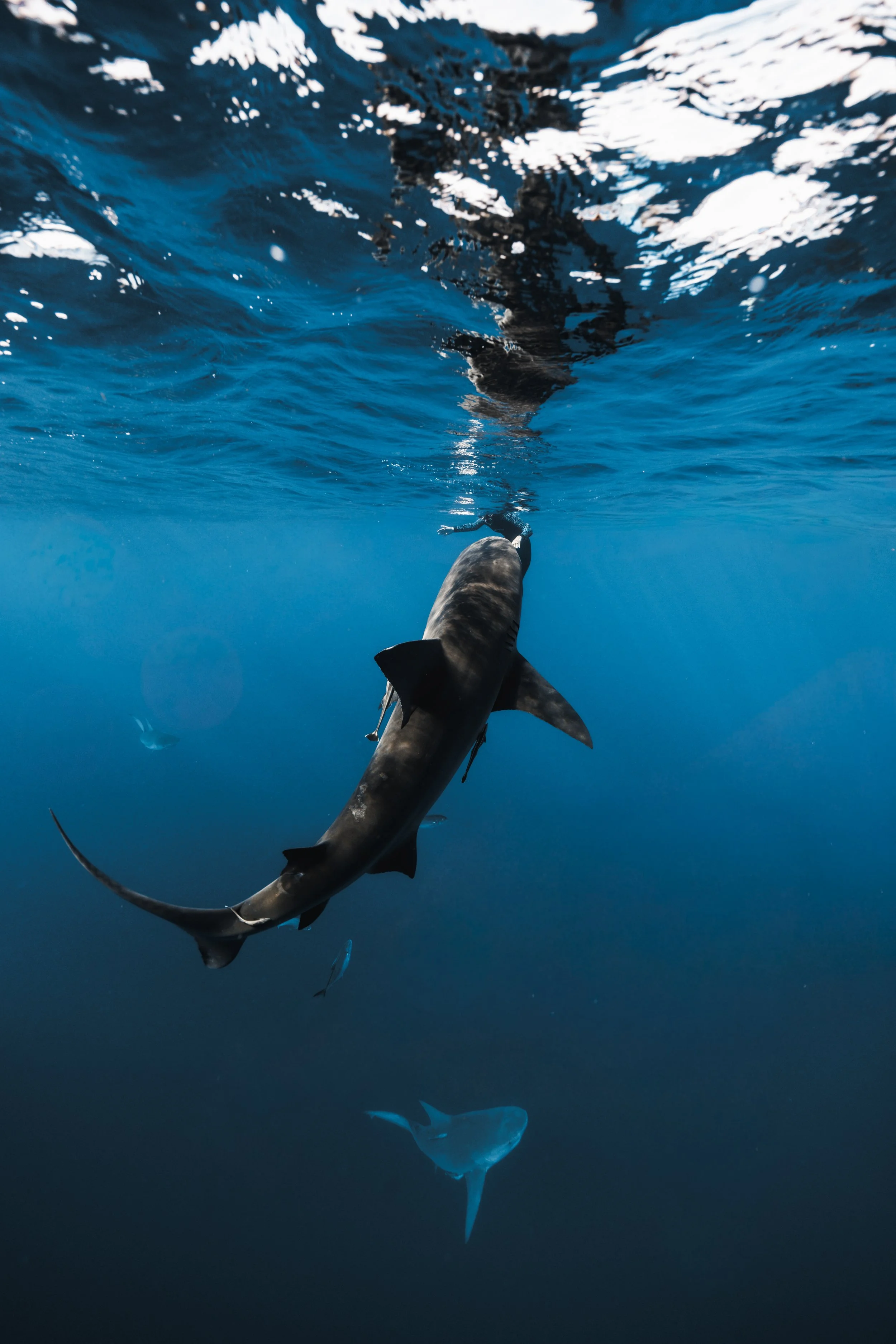
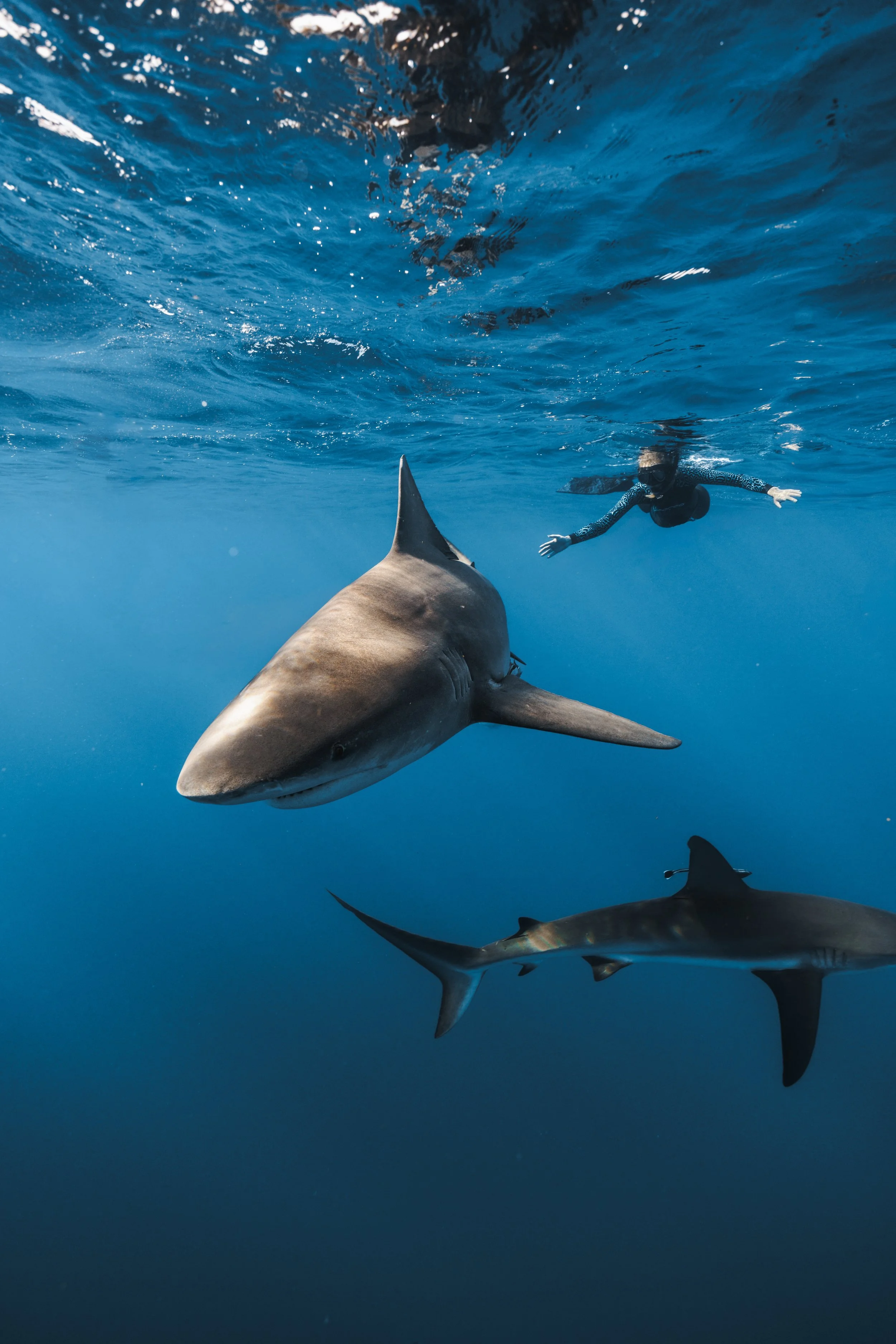
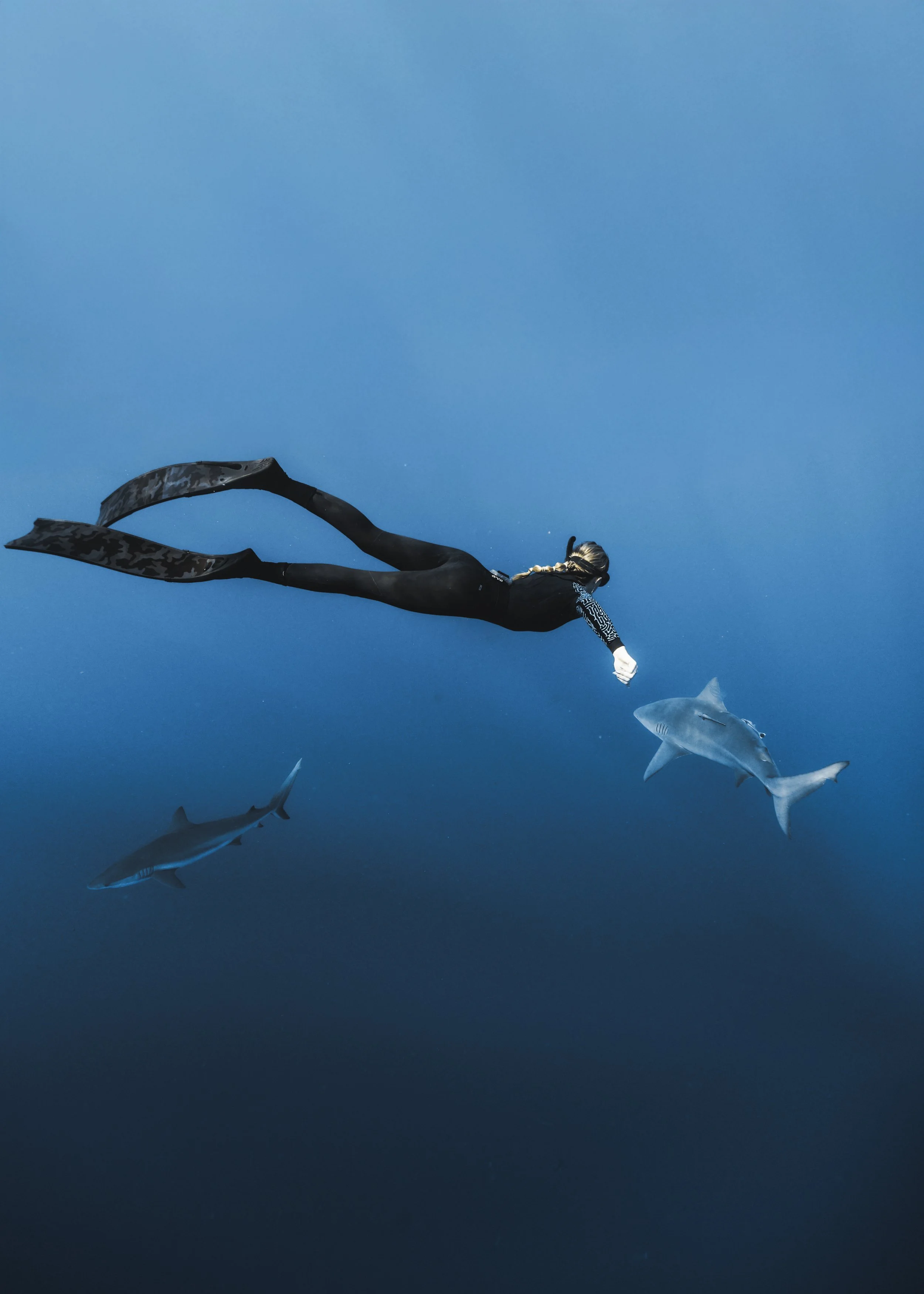
I've written before, in Art for Wildlife, about beauty as a way of building connection — a way of making people feel something toward an animal before they've had reason to think about it. Nowhere has that idea felt more rewarding to put into practice than with sharks, an animal most people are taught to fear long before they're ever taught to look at properly.
Watching them circle from the boat, waiting to go in, I expected adrenaline. What arrived instead was a calm I hadn't anticipated — and within the first few minutes underwater, once I'd begun to read the rhythm of their movement, that calm opened into something closer to awe. Every turn looked deliberate. Nothing wasted, and there was a fluidity and elegance to each glide past me in the water.
“The calm and fluidity of the water did half the work before I even pressed the shutter. When a shark glided past, there was no mistaking that the awareness ran both ways.”
— Alex Wood
There is no barrier here the way there is from a vehicle on safari — no door, no roof hatch, no glass between the lens and the animal deciding how close is close enough. Every sense stays fully switched on. You are not observing from a position of safety. You are simply present, in their water, on their terms — and the photograph is whatever grace they allow you to witness.
Thank you to Tanner Underwater and Apex Diving for navigating tricky wind conditions and delivering exceptional sightings. Their flexibility and expertise made the whole experience unforgettable.