Tyger, Tyger
photographing an animal on its own schedule
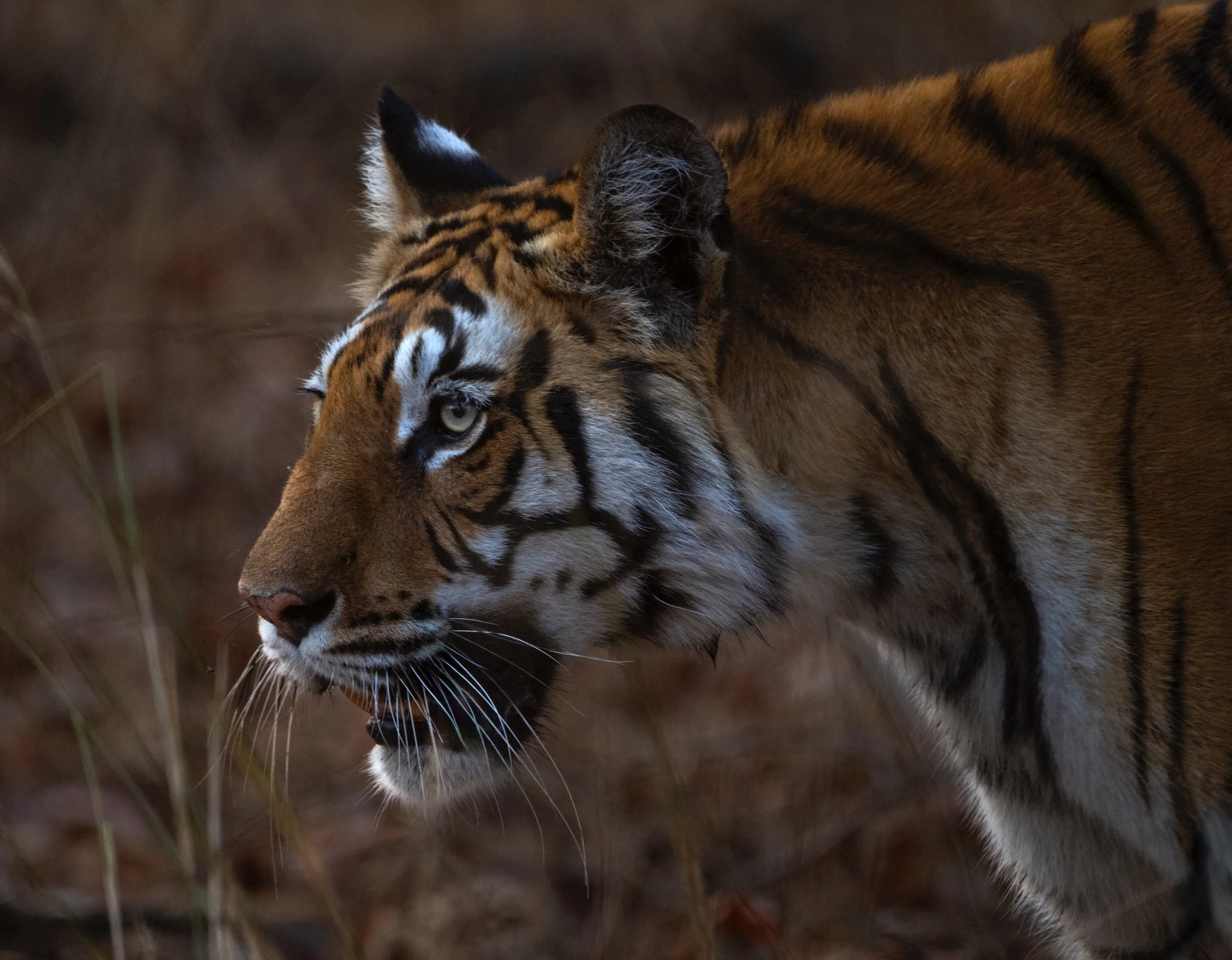
There is a version of the tiger everyone already carries in their head before they ever see one — bold stripes, low sun, a stare that seems to burn straight through the frame. Getting close to that image in reality, I learned across two weeks in central India, has almost nothing to do with finding the animal and almost everything to do with what happens to be surrounding it when you do.
The stripes themselves are rarely the problem. A tiger's markings are, without much competition, some of the most striking patterning any big cat carries, and that alone photographs well in almost any condition. What undoes so many tiger images — mine included, more often than I'd like to admit — is everything else fighting for space in the same frame. A branch crossing exactly where the eye wants to rest. Harsh midday light flattening the coat into a single tone. A background so busy that the animal, for all its colour, still struggles to separate from it. A frame where the setting genuinely adds to the animal rather than competing with it turns out to be the rare exception, not the rule.
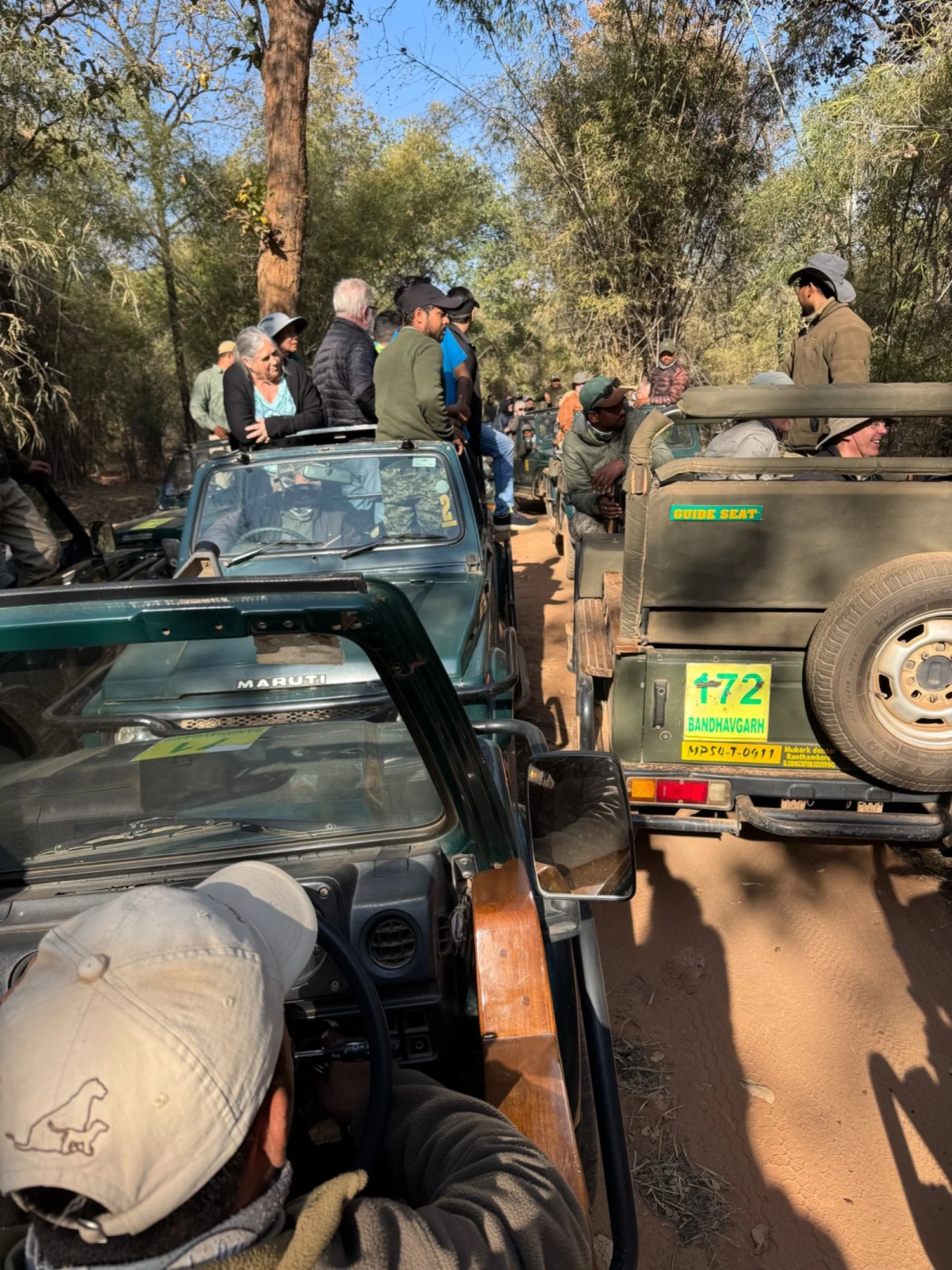
That rarity was precisely what I was chasing. I wanted something closer to an intimate portrait than documentation — a minimal frame, one clear subject, a background quiet enough to let the animal do all the work. Bandhavgarh, I learned almost immediately, was not built to make that easy. Tigers here are nocturnal by instinct, wearing a coat evolved specifically to dissolve into broken light, solitary enough that any one individual might not be seen again for days, and spread across territory too large for any single visit to meaningfully cover. The park itself compounds the problem: dense stands of bamboo throw shadows that fall, almost mockingly, in stripes of their own, so that even a tiger standing in plain sight can read as a smear of pattern rather than an animal. The list of things working against the photograph I wanted was considerably longer than I'd expected. Added to that, this was only my 2-3rd photography trip so I was still learning through trial and error.
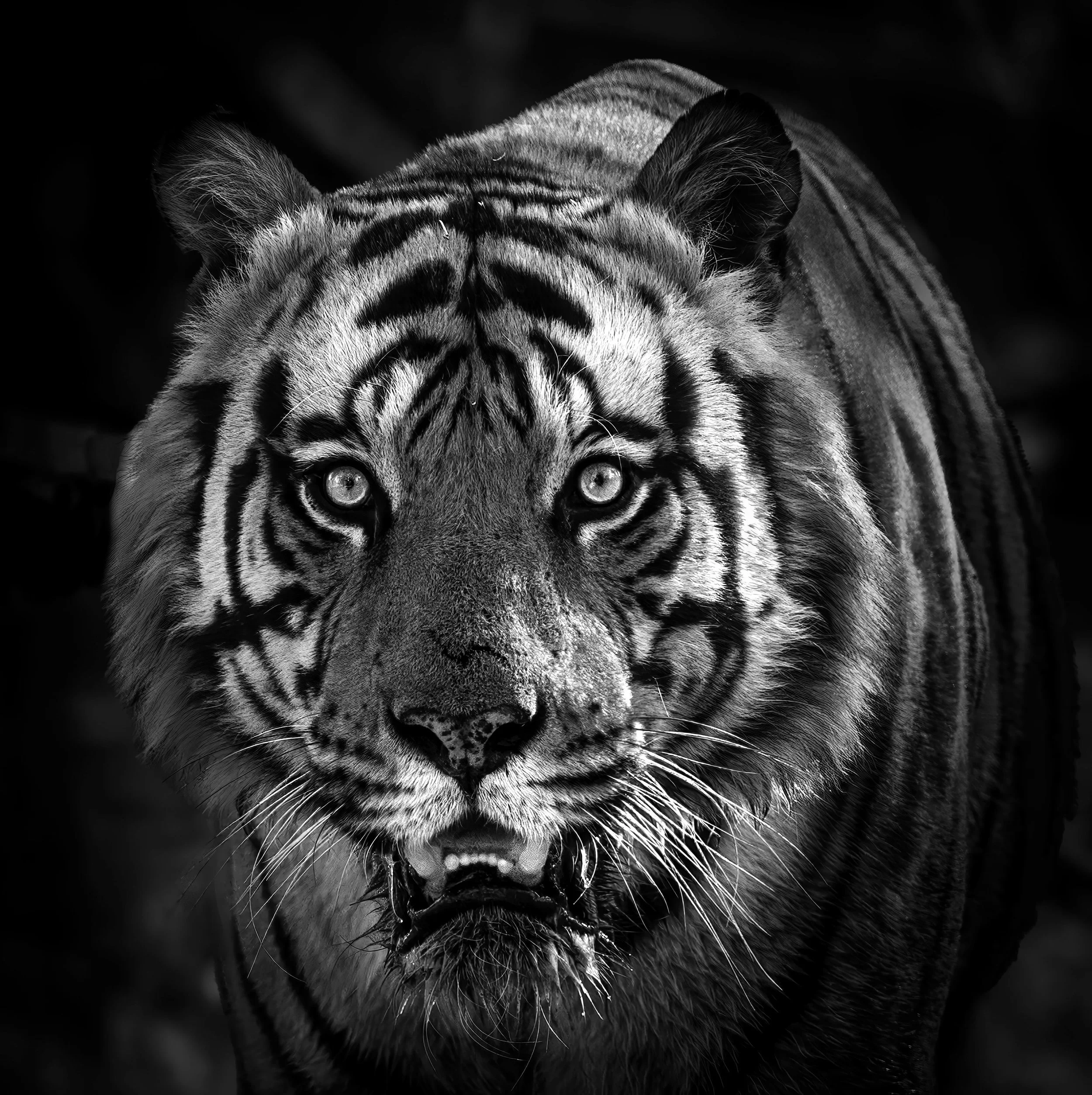
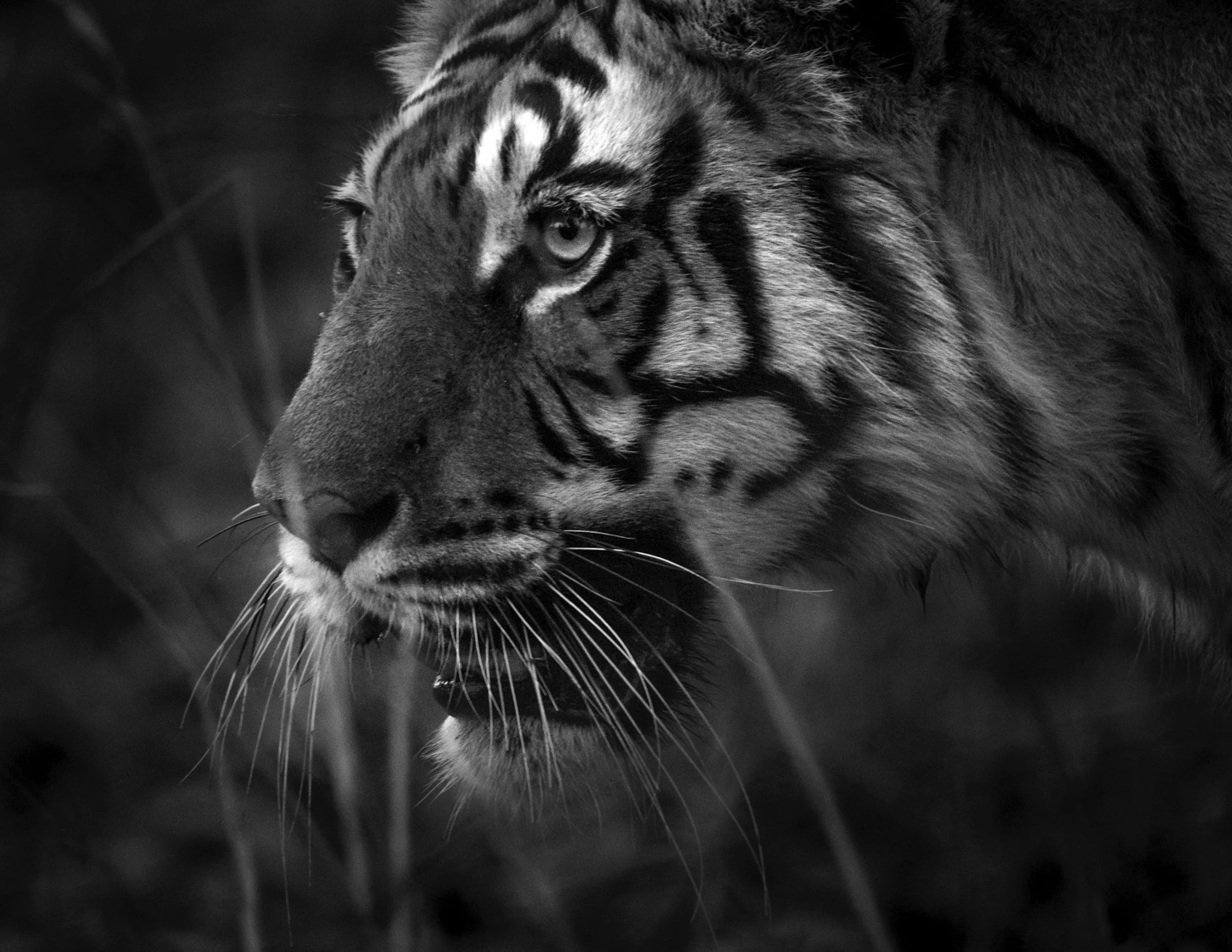
“Luck helps, undeniably. But India is where you fully understand how much of this work runs on the animal's terms and the animal's schedule. All you can really do is stay present for the experience in front of you, and trust that enough perseverance eventually means the stars will align”
— Alex Wood
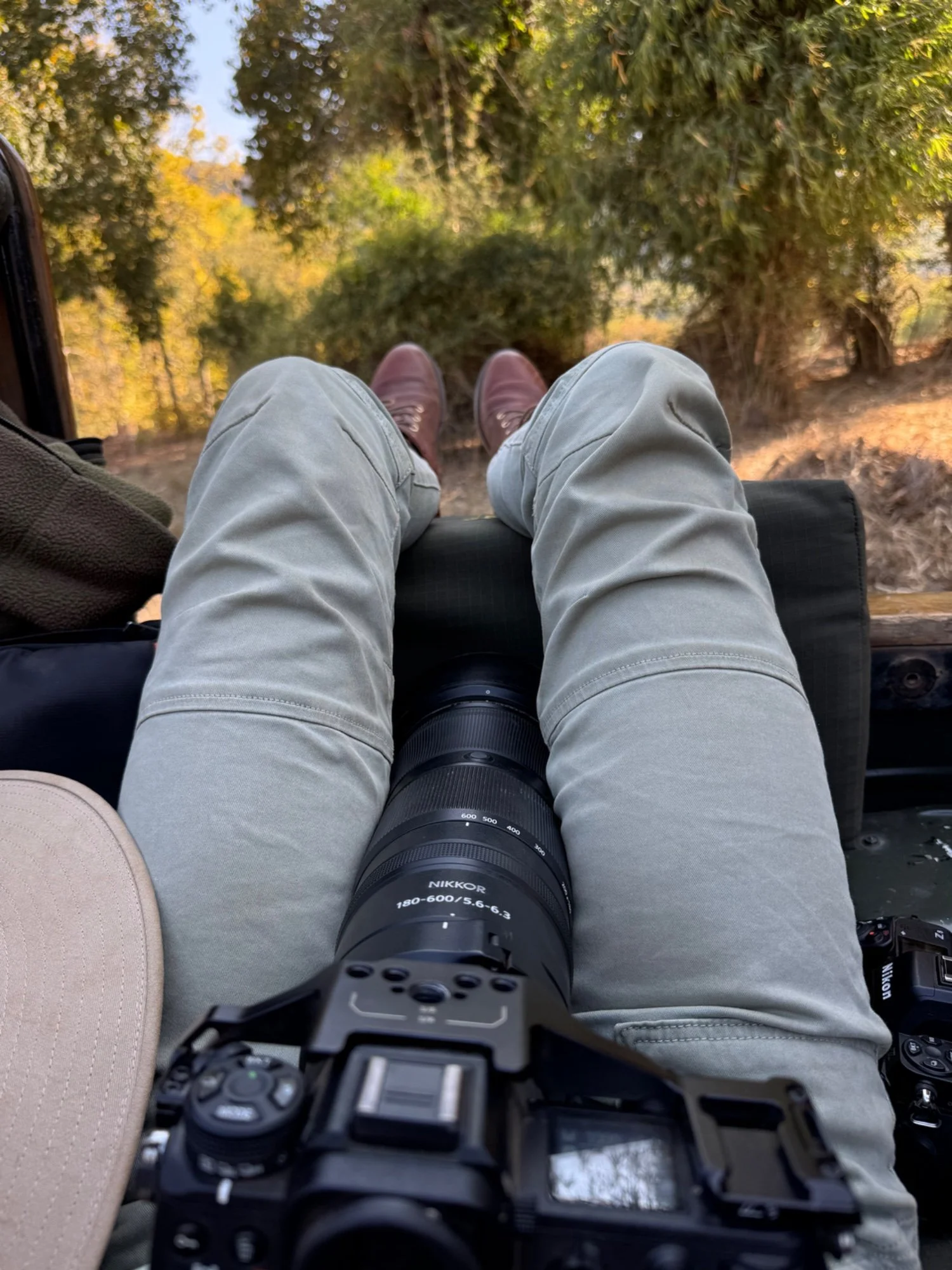
We went in March, which meant heat well past thirty degrees for most of the day and long, still hours where nothing moved at all, including the light. Two weeks, five or six nights in each park, an expert tracker and guides who understood exactly the kind of image I was after — none of it amounted to a guarantee. There's no shortcut through an expedition like this. You put in the hours, you accept the odds as they are, and you hope the accumulated time eventually buys you the frame you came for. I left with a genuinely renewed respect for photographers who spend months, sometimes years, waiting on a single animal for a single usable frame. Out of two full weeks, I came home with perhaps two or three images I'm actually proud of — though I'll admit that was still within my first six months of taking wildlife photography seriously, so I'm choosing to read that ratio kindly.
On their Terms
On the way out of Bandhavgarh there's a hand-painted sign, easy to miss, that tells departing visitors something worth sitting with: that a tiger not seen is no failure on the visitor's part, because in all likelihood the tiger saw them first. It's a small piece of roadside wisdom, but it says plainly what took me longer to arrive at on my own — that patience wasn't a virtue I could bring to this work so much as the only currency the jungle actually accepted. I was a guest moving through a world with its own rules, and the tiger was never obligated to perform for my visit.
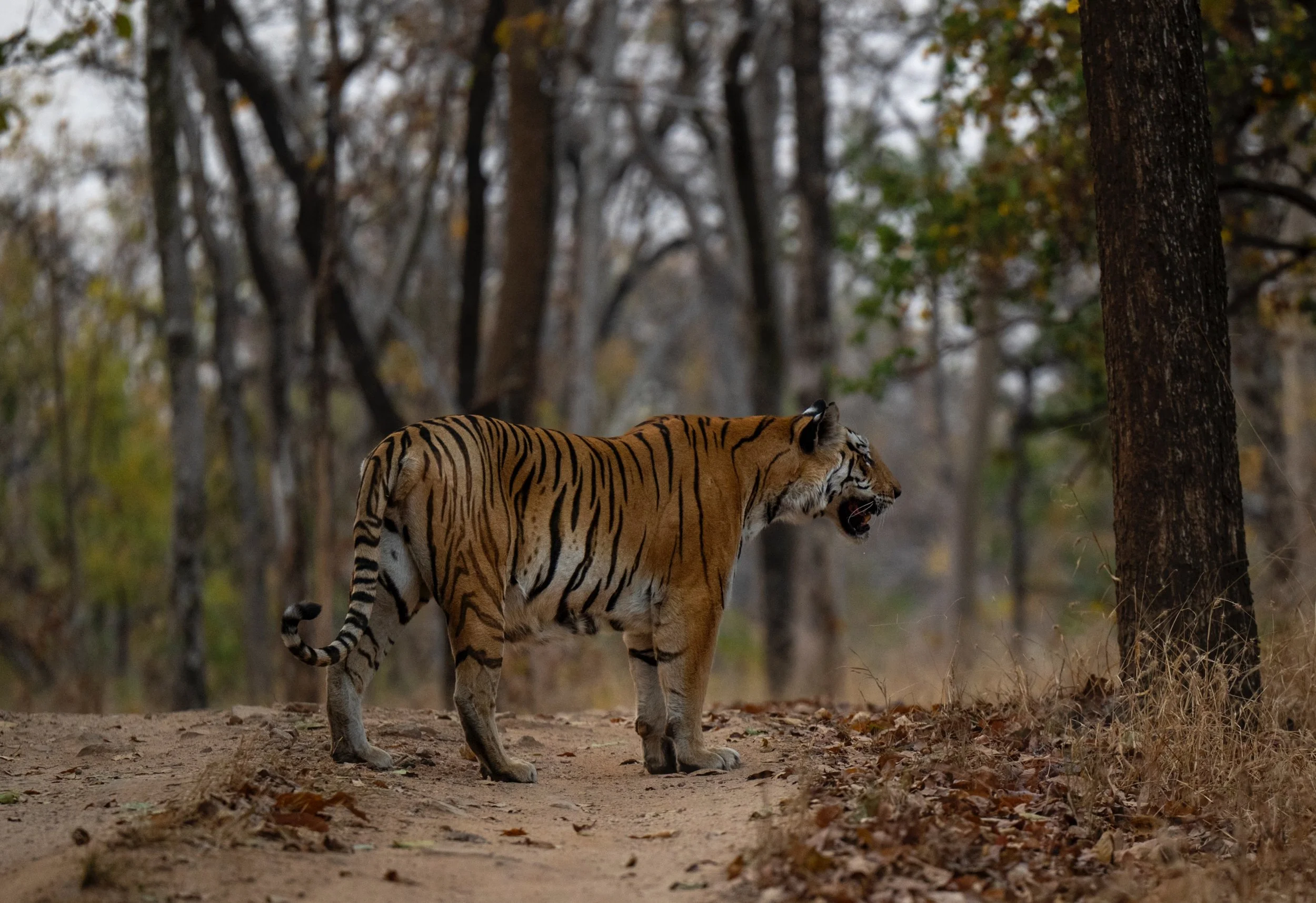
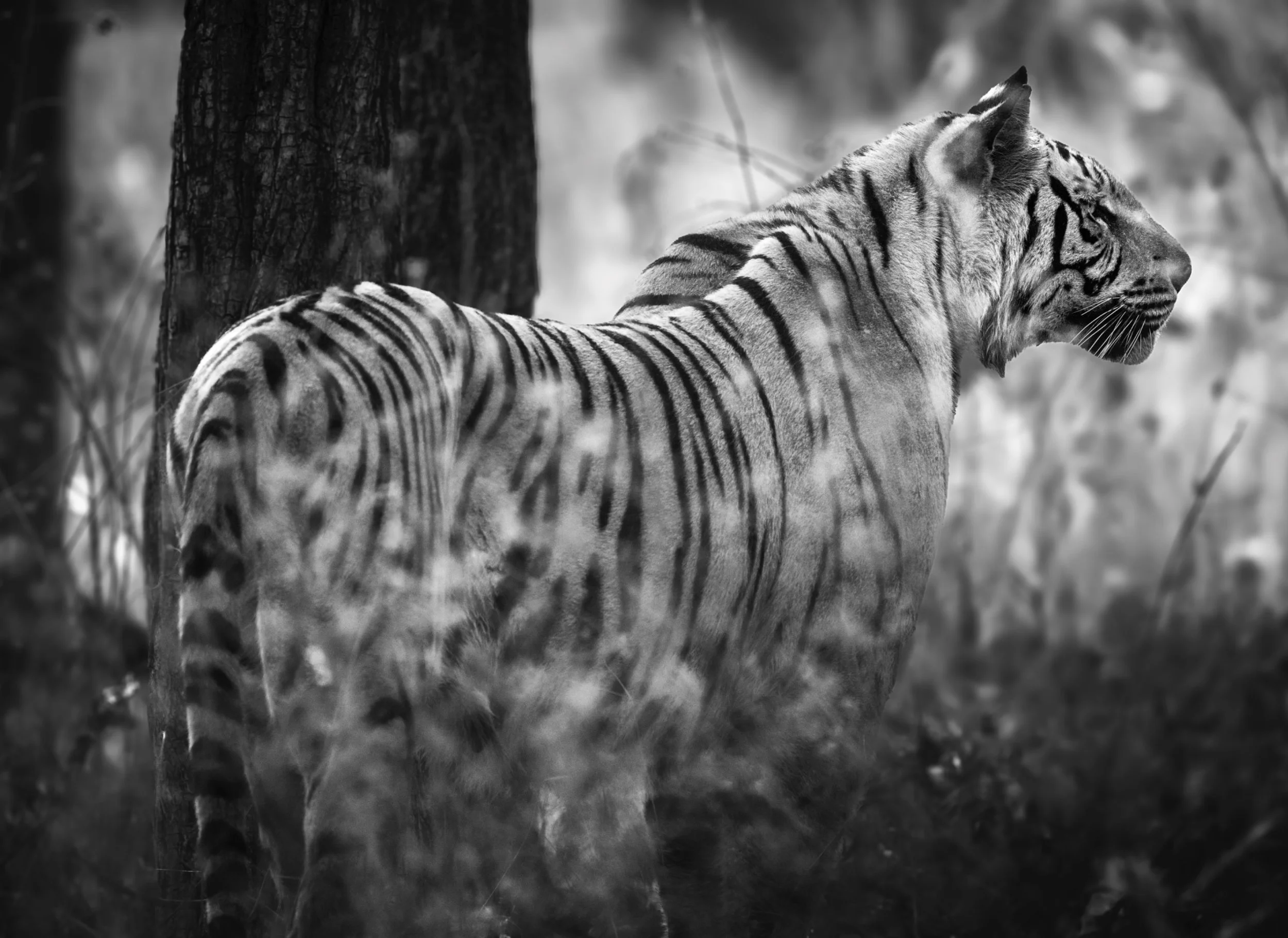
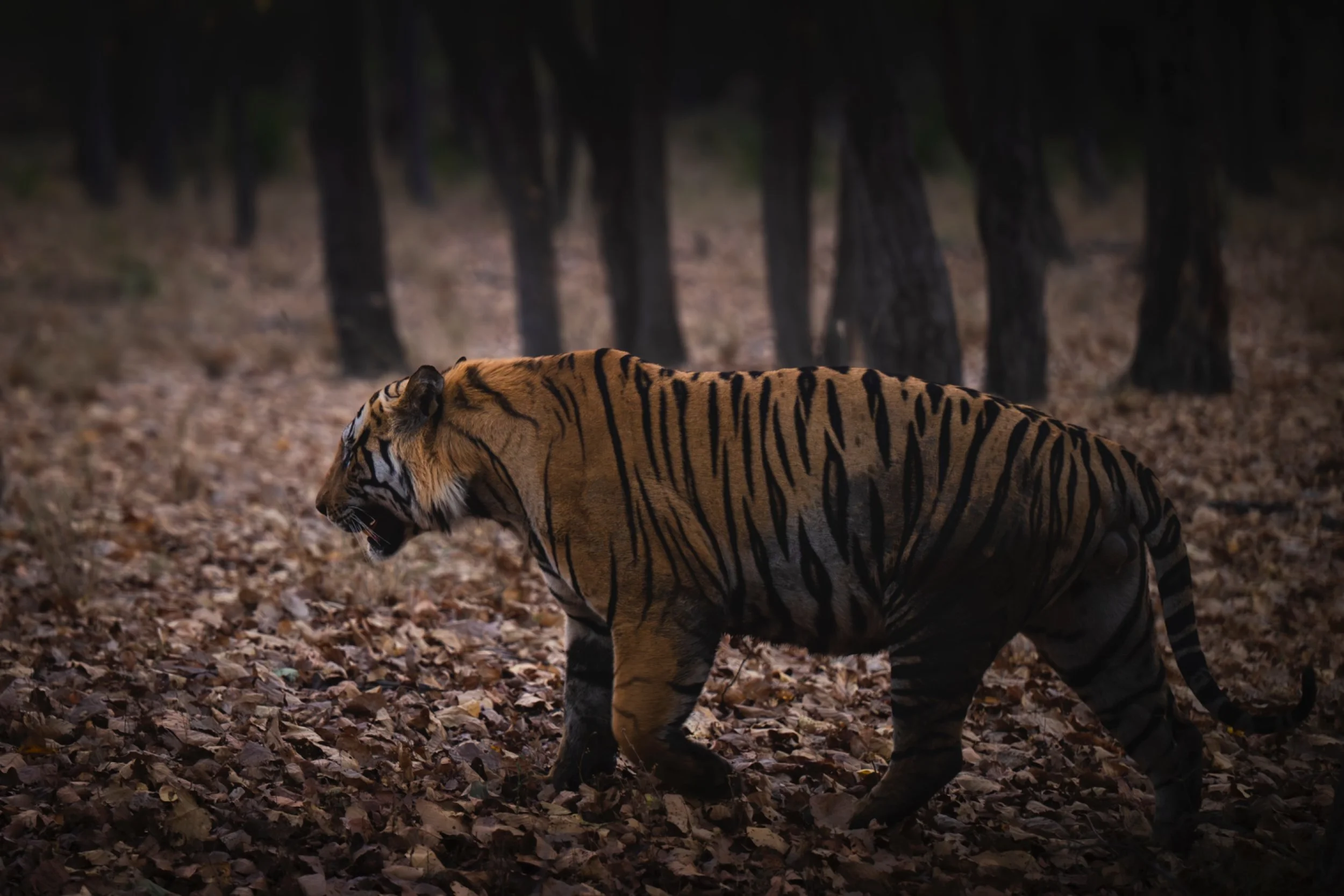
Bandhavgarh: density without guarantees
Bandhavgarh carries a reputation as one of the most tiger-dense reserves anywhere in India — recent counts put the reserve's population at somewhere in the hundreds, among the highest concentrations the country has recorded — and that reputation is precisely what draws so many photographers here first. What the numbers don't tell you is that density is not the same as visibility. The zones we had access to still totalled somewhere close to 95,000 acres: a genuine tangle of sal forest, bamboo thicket, rock, and grassland, more than large enough for an animal built for camouflage to simply not be where you are, however many of them share the reserve. An all-day permit and a sharp set of guides — ours came through Pugdundee Safaris, and their reading of terrain and tracks made a measurable difference — bought us more chances than most visitors get. It still bought us chances, not certainties.
95,000 acres across the zones we had access to
150+ tigers estimated across the reserve
2 weeks, split across Bandhavgarh and Pench
Pench: Teak Woodland
here Bandhavgarh is rock outcrops and dense, shadow-throwing bamboo, Pench opens into more classically picturesque forest — rolling sal and teak woodland, wide dry riverbeds, the kind of dappled, open ground that made the reputed inspiration for Kipling's jungle rather easier to believe.
Two parks, two entirely different sets of terms, and the same underlying lesson repeated in both: the animal decides the frame long before the photographer does. My job was simply to still be there, camera ready, when it finally agreed to one.
This is a field journal in Apex: Wild Legends — an ongoing series following the world's great predators. With thanks to Pugdundee safaris and our guide for their tracking and expert guidance across both national parks.